

Which Dot & Key Sunscreen is Best for Your Skin?
 21 Sep 2026

Your sunscreen isn’t a one-size-fits-all decision. Oily skin may prefer a lightweight, semi-matte finish, while dry skin might need something more hydrating. If you’re dealing with dullness, pigmentation, or simply want a sunscreen that feels comfortable in India’s heat and humidity, your ideal formula can look very different.
That’s where choosing between multiple sunscreens can get confusing. Dot & Key’s range includes SPF 50+ PA++++ sunscreens with different textures, finishes, ingredients, and skin-focused benefits—so the right question isn’t “Which Dot & Key sunscreen is the best?” but “Which one is the best fit for my skin?”
In this guide, we’ll make that choice easier. We’ll break down the Dot & Key sunscreen range based on skin type, skin concerns, texture, finish, and climate, so you can narrow down the formula that fits your routine. We’ll also unpack what SPF 50+ and PA++++ actually mean, how UV filters work, why photostability matters, and what to consider when choosing sunscreen for everyday use—especially in the Indian climate.
Dot & Key Sunscreen Selection Table
If you want a direct starting point, use this table. Each row maps a skin profile to a variant, with the reasoning explained in the sections that follow.
| Skin type / primary concern | Recommended Dot & Key variant | Why |
|---|---|---|
| Oily or acne-prone, wants matte finish | Cica Calming Mattifying Sunscreen | Fragrance-free, semi-matte, formulated for oily and sensitive skin |
| Dry, dehydrated or sensitive | Blueberry Hydrate Barrier Repair Sunscreen | Ceramides, hyaluronic acid, water-cream texture |
| Dull skin, sun spots | Vitamin C + E Super Bright Sunscreen | Vitamin C derivative and vitamin E alongside New Age UV Filters |
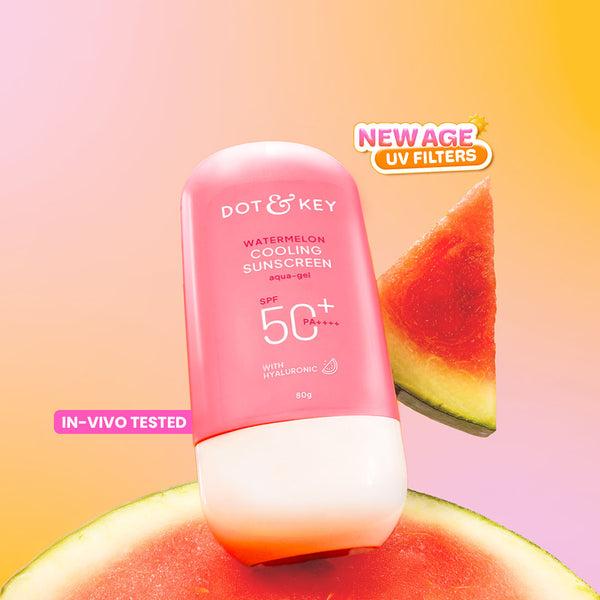
| Humid climate, wants cooling feel, uneven skin texture | Watermelon Cooling Sunscreen | Aqua-gel texture, cooling sensation, lightweight, New Age UV Filters |
| Wants hydration and a bouncy finish | Dragon Fruit Bounce Sunscreen | Ectoin, multi-layer hyaluronic acid, niacinamide, New Age UV Filters, cushiony gel |
| Wants coverage and even-tone skin | Strawberry Dew Tinted Sunscreen (15 shades) | Iron oxides for tint, uniform coverage, no white cast, New Age UV Filters |
This table is a starting point, not a prescription. The sections below explain the reasoning so you can adjust based on your own experience.
What SPF 50+ PA++++ Actually Means (and Why It Matters in India)
Before comparing variants, it helps to understand what the ratings on a Dot & Key sunscreen bottle are telling you. Every variant discussed here carries SPF 50+ and PA++++, but those two numbers measure different things.
SPF vs PA: Two Different Types of Protection
SPF (Sun Protection Factor) measures protection against UVB rays. UVB is the primary cause of sunburn and plays a significant role in skin cancer risk. SPF 50 blocks approximately 98% of UVB rays under standard testing conditions, compared with roughly 97% for SPF 30.
PA (Protection Grade of UVA) measures protection against UVA rays. UVA penetrates deeper into the skin, does not cause the immediate pain of a sunburn, and is associated with tanning, pigmentation, and premature skin ageing. The PA rating is expressed with plus signs: PA+, PA++, PA+++ and PA++++. PA++++ is the highest grade in the PA classification system, indicating very high UVA protection.
A sunscreen with SPF 50+ PA++++ offers both high UVB protection and the highest available UVA rating. For Indian conditions, where UVA exposure is intense throughout the year, PA++++ has become a necessity.
Why Photostability Matters More in Indian Heat
Photostable UV filters are designed to remain stable when exposed to sunlight. Dot & Key says its newer sunscreen formulations use a combination of DHHB (Uvinul A Plus), EHT (Uvinul T 150), Tinosorb S and Tinosorb M. Photostability is important because UV filters need to retain their protective properties during sun exposure. However, photostability does not eliminate the need for adequate application and reapplication.
For Indian users, this matters because the intensity and duration of sun exposure during much of the year places sustained demand on a sunscreen's filter system. A photostable formulation is more likely to maintain its stated protection through a commute, a lunch break outdoors, or a longer period near a window.
The Dot & Key Sunscreen Range at a Glance
Dot & Key's sunscreen range has expanded over time. The current core variants serve different skin profiles. The descriptions below focus on what the brand has stated about each product, combined with ingredient list analysis and patterns in user reviews. Where a claim requires verification before publication, it is flagged accordingly.
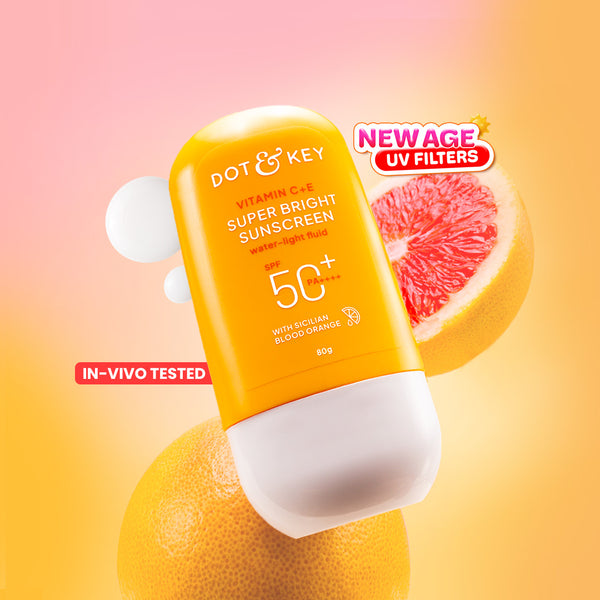
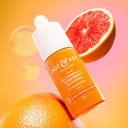
Vitamin C + E Super Bright Sunscreen SPF 50+ PA++++
Positioning: Designed for dull and tired looking skin, combining UV protection with antioxidant support. Advanced UVA protection with PA++++, PPD certified with value of 35.1 which significantly fades sun spots and pigmentation. Infused with new age UV filters, this Vitamin C water-light sunscreen is made for Indian skin (In-Vivo Tested).
Key ingredients: The formula includes vitamin C derivative, vitamin E, and niacinamide. Niacinamide appears at a moderate position in the ingredient list, suggesting a functional concentration. Vitamin E is included for its antioxidant properties.
Texture and finish: Water light, quick absorbing, with a dewy glowy finish. Users who prefer a natural glow often favour this variant, while those who want a completely matte finish may find it luminous.
Who it may suit: All skin types, people concerned with dullness or uneven tone, and those who want a single product that combines antioxidant skincare with sun protection. It layers well under makeup for many users, though those with very oily skin may prefer a mattifying option.
Cica Calming Mattifying Sunscreen SPF 50+ PA++++
Positioning: Formulated specifically for oily and sensitive skin, with a mattifying finish.
Key ingredients: Centella asiatica (cica) and niacinamide are the hero actives. The formula is described as fragrance-free, which is relevant for reactive or sensitive skin. It is positioned as non-comedogenic, meaning it is designed not to clog pores.
Texture and finish: Lightweight gel cream that absorbs quickly and leaves a semi matte finish. This is the variant most likely to appeal to users who dislike the feeling of sunscreen sitting on the skin.
Who it may suit: Oily and combination skin, acne prone skin, and anyone who finds most sunscreens too heavy or greasy. The fragrance-free formulation also makes it a reasonable option for sensitive skin that reacts to added fragrance.
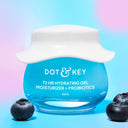
Blueberry Hydrate Barrier Repair Sunscreen SPF 50+ PA++++
Positioning: Designed for dry and sensitive skin, with a focus on hydration and barrier support.
Key ingredients: The formula includes ceramides, hyaluronic acid and blueberry extract. Ceramides are lipids that occur naturally in the skin barrier; topical ceramides are used in skincare to support barrier function. The product is described as delivering moisturisation alongside UV protection.
Texture and finish: Creamy, hydrating, and described as non-greasy despite the creamy texture. It is positioned as a water-resistant formula for up to 80 minutes, which is relevant for humid conditions or light activity.
Who it may suit: Dry skin, dehydrated skin, sensitive skin that tolerates cream textures, and anyone who finds gel sunscreens insufficiently moisturising. It can function as a moisturiser plus sunscreen step for those with dry skin, simplifying the morning routine.
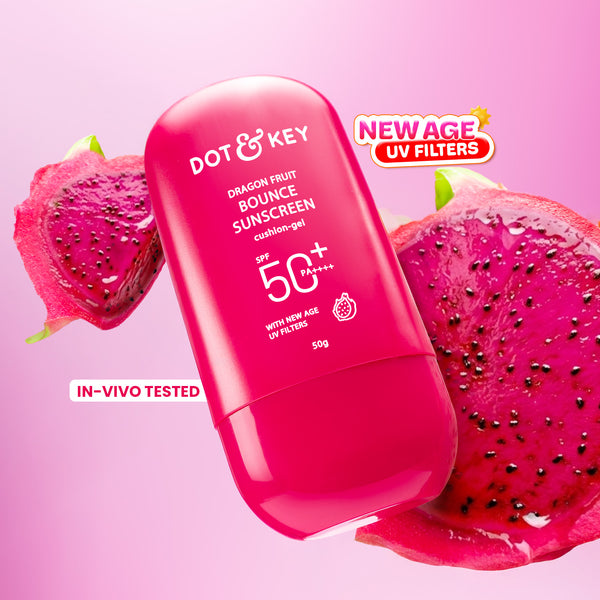
Dragon Fruit Bounce Sunscreen SPF 50+ PA++++
Positioning: A newer addition focused on hydration and a distinctive "bounce" texture.
Key ingredients: Ectoin, multi-layer hyaluronic acid and niacinamide are listed. Ectoin is an amino acid derivative studied for its ability to support hydration and protect against environmental stress. Niacinamide is included for barrier and tone support.
Texture and finish: Described as a cushiony gel that feels weightless. The finish is glowy and plump rather than matte. Some users have reported slight pilling when layered under certain makeup products, so it may work best as the final skincare step on days without heavy makeup.
Who it may suit: Oily, combination skin, anyone who wants a sunscreen with a sensorial, hydrating feel, and users who prefer a dewy finish. It is not the best match for those who want a completely matte or oil-absorbing finish.
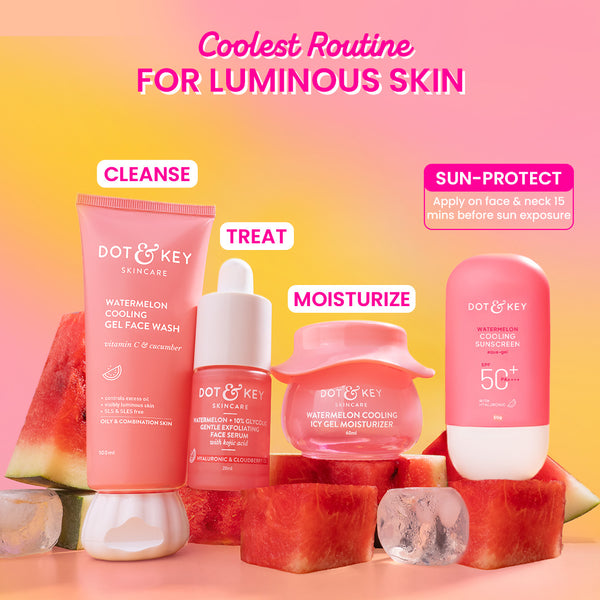
Watermelon Cooling Sunscreen SPF 50+ PA++++
Positioning: Designed for humid climates and extended outdoor exposure, with an immediate cooling sensation on application.
Key ingredients: Watermelon extract and hyaluronic acid are the primary named ingredients. The formula is described as controlling excess oil while delivering lightweight hydration.
Texture and finish: Aqua-gel texture that is fast-absorbing and non-greasy. The cooling effect is a sensory feature that many users find pleasant in hot, humid weather. The finish is described as no white cast.
Who it may suit: Combination to oily skin in humid conditions, anyone who wants a lightweight sunscreen for outdoor activity, and users who dislike the feeling of heavy products in summer. It is a reasonable option for monsoon and coastal climates.
What to note: The cooling sensation is a sensory experience, not a therapeutic effect.
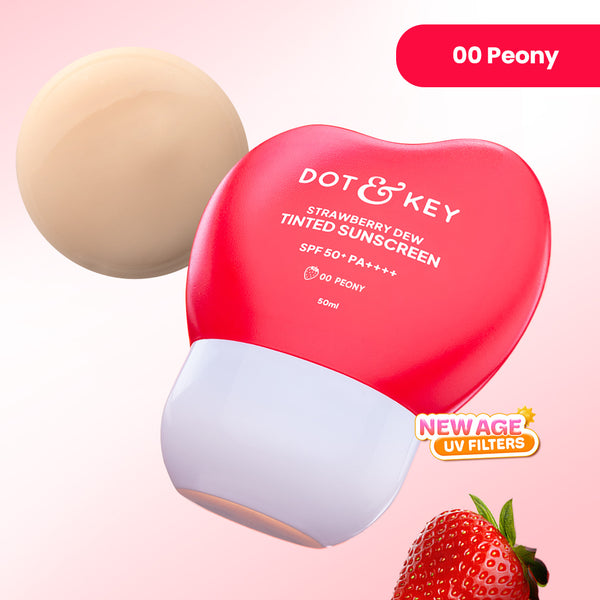
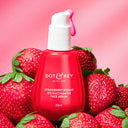
Strawberry Dew Tinted Sunscreen SPF 50+ PA++++ (15 Shades)
Positioning: Dot & Key's most significant recent launch, offering 15 tinted shades designed for Indian skin tones.
Key ingredients: Hyaluronic, niacinamide and strawberry are listed, alongside new age UV filters & iron oxides which provide the tint and some visible light protection. The formula is described as waterlight and quick absorbing.
Texture and finish: Lightweight with a natural dewy finish and buildable coverage. The tint helps even out skin tone while the iron oxides reduce the appearance of white cast that some untinted sunscreens leave on deeper skin tones.
Shade range: The 15 shades span lighter tones (Peony, Porcelain, Rose, Warm Ivory, Peach), medium tones (Sand, Honey, Almond, Beige, Cinnamon) and richer tones (Caramel, Hazelnut, Mocha, Fudge, Espresso). This is a broader shade range than most Indian sunscreen launches, though shade matching still requires testing because undertone matters as much as depth.
Who it may suit: Anyone who wants sun protection with light coverage, users who have struggled with white cast from untinted sunscreens, and those who prefer a no makeup makeup look. It is also a practical option for people with melasma or post-inflammatory hyperpigmentation who want visible-light protection in addition to UV protection.
How to Choose Sunscreen: A Skin-Type Decision Framework
The table above gives a quick answer. This section explains the reasoning so you can adjust if your skin does not fit neatly into one category.
Step 1: Identify Your Skin Type
Skin type describes how much oil your skin produces naturally. It is not the same as your current skin condition, which can change with weather, stress, medication and routine.
If you are unsure, wash your face with a gentle cleanser, wait one hour without applying anything, and observe where shine appears. Shine across the whole face suggests oily skin. Shine only in the T-zone suggests combination skin. No shine and a tight feeling suggests dry skin.
| Skin type | Characteristics | Dot & Key starting point |
|---|---|---|
| Oily | Shiny across the face within an hour of cleansing, enlarged pores, prone to breakouts | Cica Calming Mattifying |
| Dry | Tightness after cleansing, flaking, dull appearance | Blueberry Hydrate Barrier Repair |
| Combination | Oily T-zone, normal or dry cheeks | Cica Calming or Watermelon Cooling |
| Normal | Comfortable, balanced, few concerns | Any variant based on texture preference |
| Sensitive | Reacts to fragrance, essential oils or certain actives | Cica Calming (fragrance-free) or Blueberry (if tolerating cream textures) |
Step 2: Identify Your Primary Concern
Beyond skin type, your main concern should guide the choice.
| Primary concern | What to look for | Dot & Key option |
|---|---|---|
| Acne and breakouts | Non-comedogenic, fragrance-free, mattifying | Cica Calming Mattifying |
| Dullness and uneven tone | Antioxidants, niacinamide | Vitamin C + E Super Bright |
| Pigmentation and dark spots | High UVA protection, visible-light protection | Strawberry Dew Tinted (iron oxides) |
| Dryness and dehydration | Hydrating ingredients, ceramides | Blueberry Hydrate Barrier Repair |
| Sensitivity and redness | Fragrance-free, soothing actives | Cica Calming (cica, niacinamide) |
| Oil control in humidity | Lightweight gel, mattifying | Watermelon Cooling or Cica Calming |
Step 3: Factor in Climate and Lifestyle
Indian conditions vary enormously. A sunscreen that works in Bengaluru's moderate climate may feel different in Chennai's coastal humidity or Delhi's dry heat.
- Humid coastal or monsoon conditions: Watermelon Cooling or Cica Calming. Gel textures resist the heavy feeling that creams can develop in humidity.
- Dry heat (north and central India): Blueberry Hydrate Barrier Repair or Dragon Fruit Bounce. Hydration matters as much as UV protection when the air is dry.
- Pollution-heavy urban environments: Vitamin C + E Super Bright or Cica Calming. Antioxidant support is relevant when pollution adds oxidative stress.
- Air-conditioned indoor environments: Blueberry Hydrate Barrier Repair or Dragon Fruit Bounce. AC depletes skin moisture, and a hydrating sunscreen helps offset that.
- Frequent outdoor exposure: Strawberry Dew Tinted for visible-light protection, or Watermelon Cooling for a lightweight reapplication-friendly texture.
Texture, Finish and White Cast: What to Expect
White cast is one of the most common frustrations with sunscreen, particularly for medium to deep skin tones. It occurs when the UV filters or other ingredients in a formula leave a visible whitish residue on the skin after absorption.
The Dot & Key range handles this differently across variants.
| Variant | Texture | Finish | White cast risk |
|---|---|---|---|
| Vitamin C + E | Water-light lotion | Dewy | Low |
| Cica Calming | Lightweight gel-cream | Semi-matte | Low |
| Blueberry | Cream | Hydrated, non-greasy | Low |
| Dragon Fruit | Cushiony gel | Glowy, plump | Low |
| Watermelon | Aqua-gel | Fresh, non-greasy | Low |
| Strawberry Dew Tinted | Waterlight tinted | Satin, buildable | Low (& shade-dependent) |
How to Apply and Reapply Sunscreen in Indian Conditions
Choosing the right sunscreen is only half the task. How you apply it determines how much protection you actually get.
The Two-Finger Rule and Why Most People Underapply
The standard recommendation for facial sunscreen is approximately two finger-lengths of product for the face and neck. Most people apply significantly less, often around a quarter to a half of the amount used in the testing that determined the SPF rating.
If you apply half the tested amount, you are not getting SPF 50. You may be getting something closer to SPF 15 or 20. This is not a flaw in the product. It is a gap between how sunscreens are tested and how they are used.
Dot & Key's lightweight textures make it easier to apply the full recommended amount without the product feeling heavy. This is a practical advantage of gel and water-light formulations over richer creams for daily use.
Reapplication in Humidity, Indoors and Under Makeup
Outdoors in Indian summer: Reapply every two hours during sustained sun exposure. If you are sweating, water-resistant formulas such as Blueberry (80 minutes water resistance) are more likely to stay in place. Reapply after swimming or heavy sweating regardless of the time interval.
Indoors near windows: UVA passes through glass. If you sit near a window during peak daylight hours, sunscreen is still relevant. Reapplication every three to four hours is a reasonable guideline for indoor conditions, though the intensity of exposure is lower than outdoors.
Under makeup: Reapplying cream sunscreen over makeup is impractical. Options include a tinted sunscreen like Strawberry Dew Tinted as a base, followed by a powder sunscreen for touch-ups, or using a sunscreen mist if you find one that provides adequate coverage. The practical goal is not perfection but consistency.
Blue light from screens: The blue light emitted by phones and laptops is much weaker than sunlight. However, if you have melasma or significant hyperpigmentation, visible-light protection from iron oxides (as in the tinted variant) may be worth incorporating. For most people without pigmentary concerns, the priority remains UV protection.
Frequently Asked Questions
Which Dot & Key sunscreen is best for oily skin?
The Cica Calming Mattifying Sunscreen is the most suitable Dot & Key option for oily skin. It is fragrance-free, positioned as non-comedogenic, and has a semi-matte finish designed to reduce shine. The Watermelon Cooling Sunscreen is a lighter alternative for humid days when a mattifying finish is less of a priority.
Which Dot & Key sunscreen is best for dry skin?
The Blueberry Hydrate Barrier Repair Sunscreen is formulated for dry and sensitive skin. It contains ceramides and hyaluronic acid and has a creamy, hydrating texture. The Dragon Fruit Bounce Sunscreen is another option for dry skin that prefers a gel texture rather than a cream.
Does Dot & Key sunscreen leave a white cast?
White cast varies by variant. The Blueberry, Dragon Fruit, Watermelon and Cica Calming variants are reported to have low white cast risk. The Vitamin C + E variant may leave a moderate cast on deeper skin tones when applied in the full recommended amount. The Strawberry Dew Tinted Sunscreen uses iron oxides to minimise white cast and comes in 15 shades.
What is the difference between Dot & Key's Vitamin C sunscreen and Cica sunscreen?
The Vitamin C + E Super Bright Sunscreen includes a stable vitamin C derivative and vitamin E alongside UV filters. It is positioned for dullness and uneven tone, with a dewy finish. The Cica Calming Mattifying Sunscreen includes centella asiatica and niacinamide, is fragrance-free, and has a semi-matte finish suited to oily and acne prone skin.
Is Dot & Key sunscreen good for acne-prone skin?
The Cica Calming Mattifying Sunscreen is the variant most specifically positioned for acne-prone skin. It is described as non-comedogenic and fragrance-free. "Non-comedogenic" is a formulation claim, not a guarantee, and individual responses vary. If you have active acne or are using prescription treatments, consult a dermatologist about the most appropriate sunscreen for your routine.
Can I use Dot & Key sunscreen indoors?
Yes. UVA passes through glass, so sunscreen is relevant even when you are indoors near windows. Reapplication every three to four hours is a reasonable guideline for indoor conditions. If you use screens extensively and have pigmentation concerns, a tinted sunscreen with iron oxides may offer additional visible-light protection.
Which Dot & Key sunscreen is best for humid weather?
The Watermelon Cooling Sunscreen is specifically positioned for humid climates with its aqua-gel texture and cooling sensation. The Cica Calming Mattifying Sunscreen is also suitable for humid conditions because of its lightweight, semi-matte finish that resists the heavy feeling that cream sunscreens can develop in humidity.
How often should I reapply Dot & Key sunscreen?
During sustained outdoor exposure, reapply every two hours. If you are sweating heavily or swimming, reapply after towelling dry regardless of the time interval. Indoors, every three to four hours is a practical guideline if you are near windows or spending extended periods in daylight.
Is Dot & Key sunscreen tested on animals?
Dot & Key states that its products are cruelty free and vegan. The brand does not conduct animal testing.
What does PA++++ mean on Dot & Key sunscreen?
PA++++ is the highest rating in the Protection Grade of UVA system. It indicates extremely high UVA protection. UVA rays penetrate deeper into the skin than UVB, contribute to pigmentation and premature ageing, and are present throughout the year in India. PA++++ is a meaningful rating for daily use in Indian conditions.