



Does Sunscreen Remove Tan? A Dermatologist-Informed Guide
 21 Sep 2026

Wondering if sunscreen can help get rid of an existing tan? The short answer is no. Sunscreen doesn’t remove a tan that’s already there. Instead, it helps protect your skin from UV radiation, which can trigger more melanin production and make your tan darker. Once the skin has produced extra melanin, it naturally fades over time as skin cells are shed. Gentle exfoliation and brightening ingredients can support this process.
Understanding the difference between preventing a tan and fading an existing one can help you set realistic expectations from your skincare routine. If you’re using sunscreen hoping it will erase your existing tan, you may be disappointed. But if you’re using it consistently to protect your skin from further tanning while supporting your skin’s natural renewal, you’re taking the right approach.
The Direct Answer: No, Sunscreen Does Not Remove Tan
Sunscreen is a preventive product, not a corrective one. Its purpose is to reduce the amount of ultraviolet radiation that reaches your skin. When UV radiation is reduced, the signal for melanin production is reduced, which means less new tan forms.
But sunscreen does not contain ingredients that bleach, lighten, or erase melanin that is already present in your skin. That is not a flaw in sunscreen formulation. It is simply not what sunscreen is designed to do.
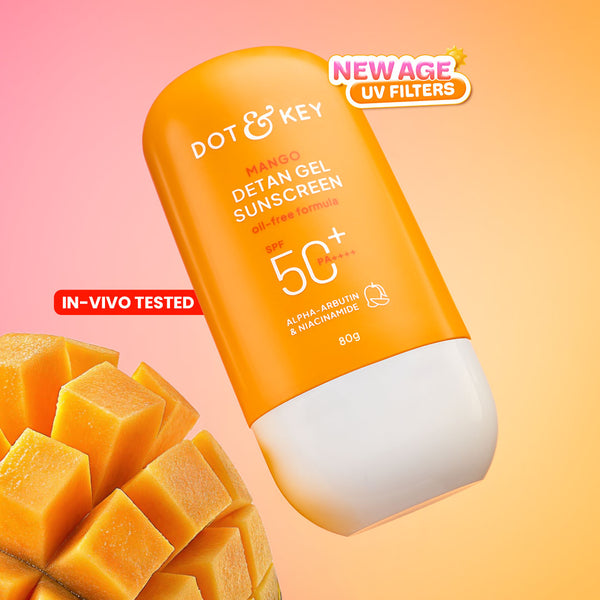
The confusion arises because some sunscreens are marketed as “anti-tan” or “de-tan” products. These products typically contain added brightening ingredients such as niacinamide or vitamin C alongside UV filters. The sunscreen is doing its normal job of prevention, while the added ingredients may help fade existing pigmentation over time. The sunscreen itself is not removing the tan.
How Tanning Actually Works
To understand why sunscreen cannot remove a tan, you need to understand what a tan is.
A tan is your skin's response to DNA damage caused by ultraviolet radiation. When UV rays penetrate the skin, they damage the DNA of skin cells. In response, specialised cells called melanocytes produce melanin, a pigment that absorbs UV radiation and helps protect the cell nucleus from further damage.
The process is regulated by an enzyme called tyrosinase, which catalyses the first step in melanin production. UV radiation increases the transcription of the tyrosinase gene, which leads to more melanin being produced and distributed to surrounding skin cells.
There are two phases of tanning:
Immediate pigment darkening: This occurs within minutes of UV exposure. It involves the oxidation and redistribution of existing melanin, not new melanin synthesis. It fades within hours to days.
Delayed tanning: This develops over 48 to 72 hours after exposure and involves new melanin production. This is the tan that lasts for weeks.
Once melanin has been produced and transferred to keratinocytes (the main cells of the epidermis), it remains there until those cells are shed through the natural process of skin turnover. Sunscreen applied after the tan has formed has no mechanism to remove that melanin.
How Sunscreen Works (and Why It Cannot Remove Tan)
Sunscreen works by either absorbing UV radiation (chemical filters) or reflecting and scattering it (mineral filters). In both cases, the goal is to reduce the amount of UV radiation that reaches the skin's surface and penetrates to the melanocytes.
The effectiveness of a sunscreen is measured by its Sun Protection Factor (SPF), which primarily measures protection against UVB rays. SPF 30 blocks approximately 97% of UVB rays, and SPF 50 blocks approximately 98%. No sunscreen blocks 100% of UV radiation. This is why tanning is still possible with sunscreen use, even when it is applied correctly.
Crucially, SPF is a measure of prevention, not correction. It tells you how much longer your skin will take to burn compared to unprotected skin. It does not tell you anything about removing existing pigmentation.
UVA rays, which penetrate more deeply and are a major driver of tanning and photoaging, are measured by the PA rating (PA+ to PA++++). A broad-spectrum sunscreen protects against both UVA and UVB. But again, this protection is about reducing future damage, not undoing past damage.
Prevent vs Remove: A Clear Distinction
| Sunscreen | Tan Removal | |
|---|---|---|
| Primary function | Prevents UV radiation from reaching the skin | Fades or removes existing melanin |
| Mechanism | Absorbs or reflects UV rays | Exfoliates tanned cells or inhibits melanin synthesis |
| Timeline | Works immediately upon application | Takes weeks to months |
| Evidence base | Extensive, well-established | Varies by method and ingredient |
| Effect on existing tan | None | Directly targets pigmentation |
This table matters because marketing language often blurs the line. A product labelled “anti-tan sunscreen” is not removing your tan. It is preventing more tan from forming, and possibly containing ingredients that may help fade existing pigmentation over time.
Why You Might Still Tan While Wearing Sunscreen
If you are applying sunscreen and still tanning, several factors may be at play.
Application errors: Most people apply far less sunscreen than the amount used in laboratory testing. The SPF on the label assumes an application of 2 mg/cm². In reality, most users apply 0.5 to 1 mg/cm², which drastically reduces the actual protection.
Reapplication gaps: Sunscreen degrades with sweat, water, and friction. Reapplication every two hours is recommended, but most people do not reapply at all during a typical day outdoors.
Skin tone differences: Medium to dark brown skin tones have more active melanocytes and tan more readily. A dermatologist explains: “With prolonged sun exposure, sweat, water, and friction, tanning is inevitable, especially for medium to dark brown skin tones. Fair Indian skin tones may experience minimal or no visible tanning with consistent sunscreen use, but their experience cannot be compared to medium or deeper brown skin tones”.
Fitzpatrick skin type context:
| Fitzpatrick Type | Typical Features | Tanning Response |
|---|---|---|
| I | Pale white skin, red/blond hair, freckles | Always burns, never tans |
| II | Fair skin | Usually burns, tans minimally |
| III | Darker white to light brown skin | Burns slightly, tans easily |
| IV | Light brown skin | Rarely burns, tans easily |
| V | Brown skin | Rarely burns, tans darkly |
| VI | Dark brown or black skin | Never burns, tans deeply |
If you have a higher Fitzpatrick type, you will tan more readily and visibly, even with sunscreen use.
What Actually Fades a Tan
If sunscreen cannot remove a tan, what can?
Time: The Most Underrated Factor
The most reliable tan-removal method is time. A sun tan fades over 7 to 10 days as the outermost layer of skin begins to exfoliate naturally, but it can take up to 30 days for a tan to fade away completely as the body gradually sheds the tanned skin cells. This timeline is not a failure of your routine. It is simply how skin turnover works.
Gentle Exfoliation
Exfoliation accelerates the removal of dead skin cells that contain melanin. Both physical exfoliants (gentle scrubs) and chemical exfoliants (AHAs and BHAs) can help.
Alpha-hydroxy acids (AHAs) such as glycolic acid and lactic acid decrease the cohesion between corneocytes, leading to exfoliation. Beta-hydroxy acids (BHAs) such as salicylic acid are lipophilic and can penetrate into pores. A mild AHA (glycolic or lactic acid, 5–8%) used twice a week at night can accelerate natural skin turnover without causing irritation.
Brightening Ingredients That Have Evidence
Several topical ingredients have evidence supporting their use in fading pigmentation, including tan:
| Ingredient | Mechanism | Evidence Level |
|---|---|---|
| Niacinamide | Reduces pigmentation, improves skin tone | Moderate to strong |
| Vitamin C | Inhibits tyrosinase, antioxidant | Moderate |
| Alpha arbutin | Inhibits tyrosinase | Moderate |
| Kojic acid | Inhibits tyrosinase | Moderate |
| Azelaic acid | Reduces pigmentation, anti-inflammatory | Moderate |
| Retinoids | Promote cell turnover | Moderate to strong |
A broad spectrum sunscreen containing sclareolide and niacinamide has been shown in a randomised trial to mitigate post-inflammatory hyperpigmentation induced by inflammation and visible light in darker phototypes.
These ingredients do not work overnight. Visible improvement typically requires 8 to 12 weeks of consistent use.
Professional Treatments
For more stubborn pigmentation, dermatologists may recommend chemical peels (glycolic, lactic, or kojic acid-based), laser therapy (such as Q-switched Nd:YAG), or microneedling. These treatments should be performed under professional supervision. They work by removing pigmented cells more rapidly than at-home methods, but they also carry higher risks of irritation and post-inflammatory hyperpigmentation, particularly in darker skin tones.
A Realistic Tan-Fading Timeline
| Method | Expected Timeline | Notes |
|---|---|---|
| Natural fading (no intervention) | 7–30 days | Depends on skin turnover rate |
| Gentle exfoliation (2x weekly) | 4–6 weeks | May improve appearance sooner |
| Brightening serum (daily) | 8–12 weeks | Requires consistency |
| Professional chemical peel | 1–3 sessions, 4–6 weeks | Dermatologist supervision required |
| Laser treatment | 1–3 sessions, 4–8 weeks | Not suitable for all skin types |
These timelines are estimates. Individual results vary based on skin type, depth of tan, and consistency of routine.
How to Build a Tan-Fading Routine
Morning:
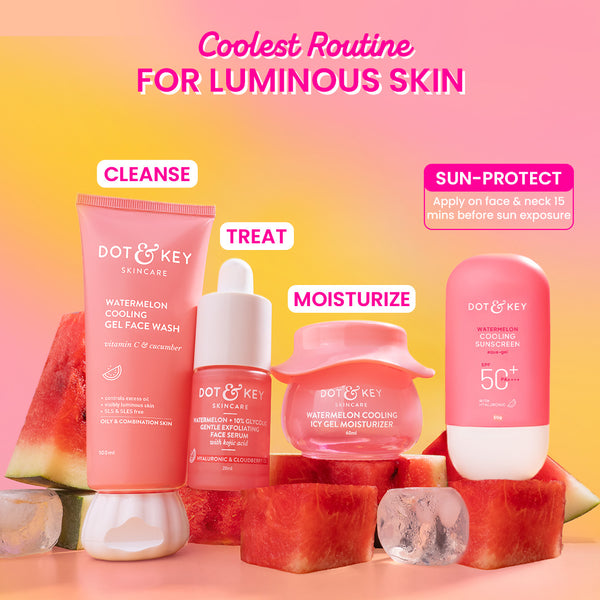
- Gentle cleanser
- Vitamin C serum (antioxidant protection and brightening)
- Moisturiser
- Broad spectrum sunscreen SPF 30–50, PA+++
Evening:
- Double cleanse to remove sunscreen and grime
- Niacinamide or alpha arbutin serum
- Moisturiser
Weekly:
- Gentle chemical exfoliation (AHA/BHA) 1-2 times per week, at night
- Do not combine exfoliation with retinoids on the same night
Ongoing:
- Reapply sunscreen every two hours when outdoors
- Do not skip sunscreen on cloudy days: UVA rays penetrate cloud cover and glass
Common Mistakes That Make Tan Worse
Using lemon juice or harsh natural remedies. These can cause phytophotodermatitis, a chemical burn that worsens pigmentation.
Over-exfoliating. Aggressive scrubbing can cause microtears, irritation, and inflammation, which can trigger post-inflammatory hyperpigmentation.
Skipping sunscreen on cloudy days or indoors. UVA radiation penetrates glass and cloud cover. Daily use of broad-spectrum SPF is the only intervention that prevents new tan from forming while active ingredients work on existing pigmentation.
Expecting overnight results. Tan removal is a gradual process. Products promising instant tan removal are not supported by evidence.
When to See a Dermatologist
If your tan does not fade after several weeks of consistent sun protection and a brightening routine, or if you notice uneven patches, dark spots that are changing, or signs of sun damage such as actinic keratoses, consult a dermatologist. They can assess whether the pigmentation is a simple tan or something that requires medical evaluation, such as melasma or post-inflammatory hyperpigmentation.
Key Takeaways
- Sunscreen prevents tanning but does not remove an existing tan.
- A tan fades naturally over 7 to 30 days as tanned skin cells are shed.
- Gentle exfoliation and evidence-backed brightening ingredients (niacinamide, vitamin C, alpha arbutin, kojic acid) can support the fading process.
- Medium to dark skin tones tan more readily and may require more time and patience.
- Consistent broad-spectrum sunscreen use is essential throughout the fading process to prevent new tan from forming.
- Professional treatments can accelerate fading but should be performed under dermatologist supervision.
FAQ
Can sunscreen remove tan overnight?
No. Sunscreen cannot remove tan at all, let alone overnight. Tanning involves melanin production that occurs over days. Fading a tan takes weeks to months.
Does SPF 50 sunscreen remove tan?
No. SPF 50 blocks approximately 98% of UVB rays, which prevents new tanning, but it does not remove existing melanin.
What is the fastest way to remove a tan?
There is no instant method. Professional treatments such as chemical peels and laser therapy can accelerate fading, but they still require weeks and multiple sessions. Gentle at-home exfoliation and brightening serums are safer for most people.
Can I tan while wearing sunscreen?
Yes. No sunscreen blocks 100% of UV radiation. Even SPF 50 allows a small fraction of UV to penetrate, which can stimulate melanin production, especially with prolonged exposure and inadequate reapplication.
Why do some sunscreens say "anti-tan"?
These products typically contain added brightening ingredients such as niacinamide or vitamin C. The sunscreen prevents new tanning, while the added ingredients may help fade existing pigmentation over time. The sunscreen itself is not removing the tan.
Does tan removal cream work?
Some creams containing ingredients such as niacinamide, vitamin C, kojic acid, or alpha arbutin may help fade tan over time, but results are gradual and require consistent use alongside sun protection. Instant tan removal is not realistic.
How long does a tan take to fade?
A tan typically begins to fade within 7 to 10 days as skin naturally exfoliates. Complete fading can take up to 30 days or longer, depending on skin type and depth of tan.
Is tan removal possible for medium to dark skin tones?
Yes, but it may take longer. Medium to dark skin tones tan more readily and visibly. Consistent sun protection, gentle exfoliation, and brightening ingredients can help, but patience is essential.