





Is Matte Sunscreen Better for Oily Skin? What You Need to Know
 14 Aug 2026

If you have oily skin, sunscreen can sometimes feel like the final step your complexion didn't ask for. You apply it in the morning, and before long your T-zone looks shiny, your skin feels slick, and you find yourself reaching for blotting paper. That's where matte sunscreen can make a difference. Designed to reduce the appearance of excess shine while providing daily UV protection, it can be a comfortable option for people who prefer a more balanced, shine-free finish.
But is matte always better for oily skin? Not necessarily. “Matte” describes the finish of a sunscreen, not how well it suits your skin. Some matte formulas use lightweight ingredients that help absorb excess oil and keep the skin comfortable, while others may feel too drying if your skin is dehydrated or sensitive. The best option is one that manages shine without compromising your skin barrier.
Your ideal sunscreen should ultimately provide more than a matte finish. Look for broad-spectrum protection, an appropriate SPF, a lightweight texture, and ingredients that support your skin's needs. Depending on your preference and skin condition, a natural or satin finish may work just as well.
In this guide, we'll explain what matte sunscreen actually does, why it can be beneficial for oily skin, which ingredients and formulation features to look for, and when a natural or satin finish may be a better choice. The goal is simple: comfortable sun protection that keeps your skin protected without leaving you feeling greasy or overly dry.
Understanding Oily Skin and Sun Protection
Oily skin is characterised by overactive sebaceous glands that produce excess sebum. This can lead to a persistent shine, enlarged pores, and a predisposition to breakouts when dead skin cells and oil become trapped. Sunscreen is non-negotiable for all skin types – UV exposure can worsen post-inflammatory hyperpigmentation, degrade collagen, and make acne marks darker and longer-lasting.
Yet many people with oily skin dread sunscreen. Traditional rich creams can feel occlusive, heavy, and greasy, leading some to skip protection altogether. That’s where formulation science has stepped in: lightweight lotions, gels, fluids, and powders, many labelled as “matte finish”, aim to solve exactly this problem.
What Does “Matte” Actually Mean in a Sunscreen?
In skincare and cosmetics, a matte finish means a shine-free, almost powdery-looking surface. A matte sunscreen is designed to leave little to no reflective sheen after application. This effect can be achieved through several mechanisms:
• Oil absorption: Ingredients that soak up surface sebum throughout the day.
• Light-scattering particles: Minerals that diffuse light to minimise the appearance of shine.
• Film-formers: Polymers that create a smooth, even base without leaving an oily residue.
Importantly, “matte” is not a regulated term. One brand’s matte sunscreen might feel silky and breathable; another might feel tight and chalky. That’s why understanding the ingredient list matters far more than the label.
How Matte Sunscreens Work: Key Ingredients Explained
Silica and Microspheres
Silica (often listed as silica, silica dimethyl silylate, or silica microspheres) is a porous, oil-absorbing powder. It acts like a microscopic sponge, wicking away excess sebum and giving the skin a smooth, velvety finish. Silica also has soft-focus properties that can blur the look of pores. It’s a common star in mattifying skincare and makeup primers.
Zinc Oxide and Titanium Dioxide
These mineral UV filters offer an inherent advantage for oily skin. Zinc oxide, in particular, has mild astringent and antimicrobial properties, and both filters sit on the skin’s surface rather than being absorbed. Many mineral sunscreens have a naturally drier, more matte finish compared to chemical formulations. However, they can leave a white cast, which newer micronized or tinted versions aim to minimise.
Niacinamide
Niacinamide (vitamin B3) is not a sunscreen filter but frequently appears in sunscreens designed for oily and blemish-prone skin. Research suggests that topical niacinamide can help regulate sebum production over time, making it a valuable partner in a daily SPF product.
Ingredients to Be Cautious Of
Some matte sunscreens achieve their oil-free feel by including high amounts of denatured alcohol (alcohol denat.). While alcohol can create an immediately lightweight, quick-drying finish, it can also strip the skin’s barrier with repeated use, potentially leading to irritation and a rebound increase in oil production. Not all alcohols are problematic – fatty alcohols like cetyl or stearyl alcohol are generally well-tolerated – but denatured alcohol high on the list merits caution, especially for sensitive or dehydrated oily skin.
The Benefits of Matte Sunscreen for Oily Skin
• Shine control: A good matte formula minimises the greasy look that often appears within hours of applying a traditional sunscreen.
• Lightweight feel: Many matte sunscreens use gel, fluid, or powder textures that feel weightless on the skin.
• Makeup-friendly surface: They double as a grip base for foundation, helping makeup stay put longer without sliding or separating.
• Pore-blurring effect: Ingredients like silica can visually smooth the skin’s texture.
• Non-comedogenic reassurance: While no ingredient is universally non-comedogenic, matte formulas for oily skin are more likely to avoid heavy emollients that can clog pores.
Potential Downsides of Matte Sunscreen (and Who Should Be Mindful)
Matte is not universally superior. Some drawbacks include:
• Over-drying: If a formula relies heavily on alcohol or excessive powders, it may leave the skin feeling tight or parched. This can compromise the skin barrier and cause irritation.
• Dehydration paradox: When oily skin is stripped, it sometimes produces even more oil to compensate. This can make shine worse over time, not better.
• Texture pilling: Some mattifying agents can ball up under makeup or when reapplied.
• White cast or chalkiness: Mineral-heavy matte sunscreens can look ashy on deeper skin tones if not carefully formulated.
Who should be cautious: If your skin is oily but also dehydrated (tight after cleansing, flakiness in some areas), a very matte, alcohol-forward sunscreen might aggravate that imbalance. The same goes for those living in cold, dry climates where a satin or natural finish could be kinder.
Matte vs Dewy Sunscreen: A Side-by-Side Comparison
Use this table to decide which finish aligns with your current skin state and lifestyle.
|
Feature |
Matte Sunscreen |
Dewy / Natural Sunscreen |
|
Primary goal |
Absorb shine, leave a flat, non-greasy finish |
Hydrate and impart a healthy, subtle glow |
|
Texture |
Often lightweight gels, fluids, powders |
Lotions, creams, or hydrating essences |
|
Key ingredients |
Silica, zinc oxide, dimethicone, niacinamide |
Glycerin, squalane, ceramides, hyaluronic acid |
|
Best for skin type |
Very oily, combination with strong T-zone oil |
Normal to dry, dehydrated oily, mature skin |
|
In humid climates |
Excels; helps keep skin looking fresh longer |
May feel heavy or look greasy |
|
Under makeup |
Acts as a primer; grips foundation well |
May need setting powder to avoid slippage |
|
Risk |
Potential over-drying, white cast, pilling |
Can look shiny or feel sticky on oily zones |
When a Non-Matte Sunscreen Might Actually Work Better
• Dehydrated oily skin: If your skin feels tight after washing but becomes oily during the day, a gentle, hydrating sunscreen with glycerin and ceramides can rebalance moisture levels without heavy occlusion. Look for “lightweight” or “water-gel” rather than a strict matte finish.
• Cold, dry weather: Low humidity can magnify the drying effects of a matte formula. A satin-finish sunscreen may keep skin comfortable while still being non-greasy.
• Using acne treatments: If you’re on prescription retinoids, benzoyl peroxide, or exfoliating acids, your skin barrier may already be sensitised. A very matte, powder-heavy SPF could cause flaking or stinging. A calming mineral sunscreen with a natural finish might be a smarter daily driver.
• Preference for glow: Some people simply prefer a skin-like, slightly luminous finish and find it easy to blot once during the day. In that case, the best sunscreen is the one you’ll actually use consistently.
How to Choose the Right Matte Sunscreen for Oily Skin
Look for these features in an ingredient list and on the label:
• Broad-spectrum SPF 50 or higher, as recommended by dermatology bodies.
• Non-comedogenic and oil-free labelling (while not a guarantee, it signals the formula was designed without heavy pore-clogging oils).
• Key mattifying ingredients: Silica, zinc oxide, or starches (like tapioca starch) to control shine.
• Supportive actives: Niacinamide to help regulate oil over time.
• Avoidance of denatured alcohol, high on the list, particularly if your skin is sensitive or dehydrated.
• Tinted options can counter white cast and offer added blue light protection.
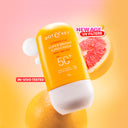
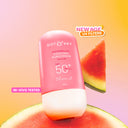
Example: For example, Dot & Key Cica + Niacinamide Matte Gel Sunscreen is formulated with niacinamide and a lightweight matte-gel texture, making it an option worth considering if you want sun protection without a heavy or greasy finish. Its positioning around oil control and a matte finish makes it particularly relevant for oily and combination skin.
Application Tips for Oily Skin
Even the best formula can perform poorly if applied incorrectly.
• Start with a light moisturiser: Skipping moisturiser can backfire. Use an oil-free, gel-based moisturiser to keep the skin balanced; let it absorb for a few minutes.
• Apply the correct amount: For the face and neck, a ¼ teaspoon (about two finger-lengths) is the standard to achieve the stated SPF. Under-application is one of the most common sunscreen mistakes.
• Warm and press: Dot the sunscreen onto cheeks, forehead, chin, and nose, then press and spread gently. Avoid aggressive rubbing, which can disturb underlying skincare or cause pilling.
• Allow it to set: Wait 2–3 minutes before applying makeup. A matte sunscreen often creates an excellent primer-like base.
Reapply strategically: Reapplication over makeup can be tricky. Options include:
• Blot then dust: Gently blot excess oil with a tissue, then apply a transparent SPF powder or a powder sunscreen.
• SPF setting spray: Mist lightly every two hours of sun exposure, though coverage is harder to standardise.
• Re-apply liquid if make-up-free: Pat a thin layer directly onto the skin.
Common Mistakes People with Oily Skin Make with Matte Sunscreen
• Skipping moisturiser: This can leave the skin’s barrier compromised, leading to more oil and irritation.
• Choosing a matte formula based solely on the word on the bottle: Ingredient-checking is essential; not all matte sunscreens are created equal.
• Using an alcohol-heavy matte sunscreen on irritated or treated skin: This can worsen sensitivity and cause stinging.
• Applying too little: A thin layer won’t give the labelled protection and may not provide the intended oil control.
• Not removing thoroughly: Mattifying products, especially mineral ones, can adhere to the skin. Double cleansing in the evening helps prevent clogged pores.
Frequently Asked Questions
Does matte sunscreen prevent acne?
Matte sunscreens are not acne treatments, but they can help by removing greasiness and selecting non-comedogenic ingredients. Some contain niacinamide, which may support clearer skin over time. For persistent acne, consult a dermatologist.
Can matte sunscreen make my skin too dry?
Yes, if the formula relies on high amounts of denatured alcohol or excessive oil-absorbing powders and your skin is already dehydrated or sensitive. Choose alcohol-free options and look for hydrating supporting ingredients.
Is mineral matte sunscreen better than a chemical for oily skin?
Not necessarily “better,” but mineral filters like zinc oxide often have a more natural matte finish and are less likely to cause irritation. New-generation chemical filters can also be formulated into elegant, lightweight textures. The right choice depends on your skin’s tolerance and the overall formula.
Can I wear matte sunscreen under makeup?
Absolutely. Many matte sunscreens function as an excellent primer, creating a smooth, shine-free canvas. Just allow it to dry down fully before applying foundation.
How do I reapply matte sunscreen over makeup?
Use an SPF setting spray for light touch-ups, or gently blot oil with a tissue and follow with a translucent SPF powder. For heavy sun exposure, it’s safest to reapply a liquid sunscreen on bare skin if possible.
Will matte sunscreen leave a white cast?
Some mineral matte sunscreens can leave a white or ashy cast, especially on deeper skin tones. Tinted versions or those with micronized zinc oxide typically minimise this issue. Always test in natural light.


