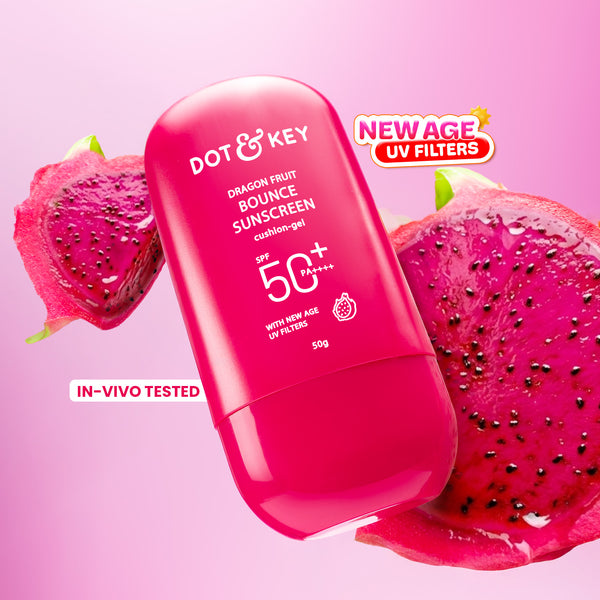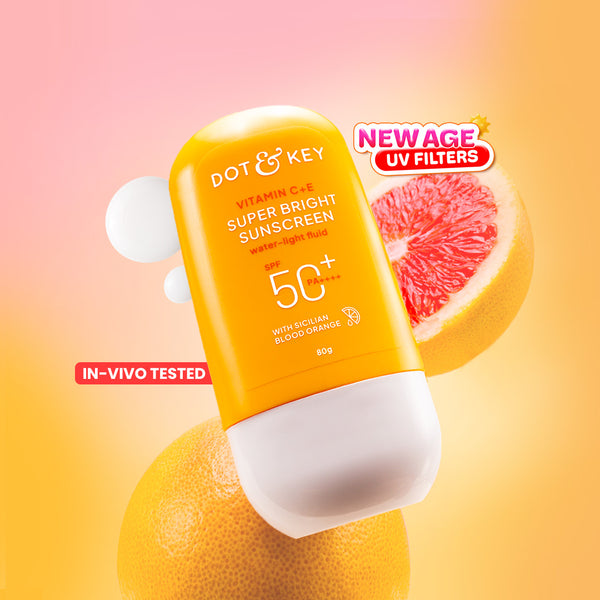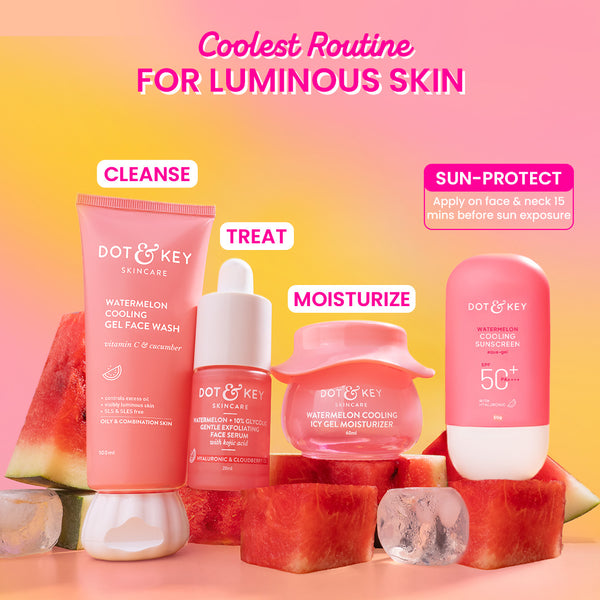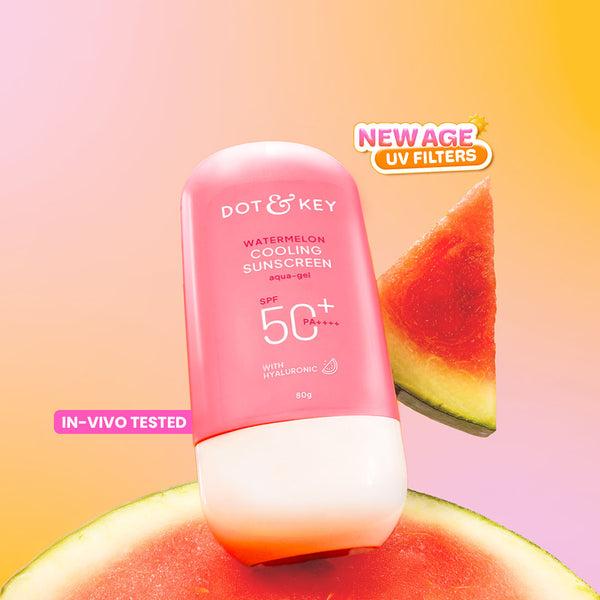




The Photostability Solution That Frees You from SPF Reapplication
 14 May 2026

Hey hey girliepops, gather around. We know you probably spent 25+ minutes doing your million-step skincare routine this morning…and proudly topped it off with sunscreen thinking it would give you that extra layer of protection. And we can confirm it was followed by a tiny hot girl moment in front of the mirror where you whispered, “I’m going to serve face today,” before confidently walking out the door thinking you had done your job protecting your skin for the rest of the day. But by the time your 11 a.m. coffee run rolls around, that layer you so carefully swiped on has already started clocking out against the sun. No, this is not us trying to attack your sunscreen or your skincare routine; it’s just chemistry.
We have all heard the sunscreen rule many times: reapply every two hours. Dermatologists say it, the FDA recommends it and every skincare girlie on social media talks about it. Especially more so if you are sweating, out for swimming or just outside for too long. But, let's be real and bring in the numbers for a second…studies show that 58% of people frequently forget to reapply, and only about 23% of sunscreen users actually do it throughout the day.
Honestly, this is not a personal failure. We can assure you that. It is a formulation problem. And that is exactly where photostability enters the chat
What Is Photostability and Why Should You Care?
If you have ever wondered why sunscreen does not simply last as long as your moisturizer, the answer lies in a concept most product labels never mention: photostability.
Photostability refers to a sunscreen formulation's ability to retain its UV absorption performance when exposed to ultraviolet radiation over time, without significant degradation of its active UV filters. In plain terms, it measures whether your sunscreen keeps working while the sun is actively trying to break it down.
Here is the paradox that sits at the heart of sun protection: organic UV filters protect your skin by absorbing UV energy, but absorbing that same energy can cause the filters themselves to degrade and lose their protective capability. A photounstable sunscreen is essentially self-destructing on your skin.
Why is this not talked about more? Because photostability testing is not mandatory in most countries, including the United States, where sunscreens are regulated as over-the-counter drugs. A product can pass SPF testing in a lab, earn a label, and still degrade significantly within an hour of real-world sun exposure. You might be wearing an SPF 50 that becomes an SPF 15 while you are still sitting at the park.
The Reapplication Problem Nobody Is Solving
The advice to reapply is sound, but the execution is wildly impractical for most people.
Consider the real-world barriers. Sunscreen gets physically rubbed off by towels and clothing, washes away during swimming, diminishes with heavy sweating, and breaks down over time, especially with sun exposure. Even water-resistant formulas only buy you 40 to 80 minutes before they need a refresh.
Then there is the behavioural side. A survey of 2,000 U.S. adults found that 53% frequently forget to apply sunscreen daily, and only 10% use SPF products every day. Of those who do apply, 58% said they frequently forget to reapply. Another study found that SPF products are not reapplied by approximately 20% to 60% of regular users, depending on the product category, and reapplication rates drop below 33% on cloudy or partly cloudy days.
People are not skipping reapplication because they do not care. They skip it because sunscreen feels sticky, greasy, or heavy. One survey revealed that 28% of consumers have skipped SPF entirely because of how it feels on their skin. Another study found that dislike of the feel or appearance of sunscreen was a barrier for 33.7% of respondents. Layer that discomfort over makeup, sweat, or a mid-workday touch-up, and the two-hour rule becomes wishful thinking.
How Photostability Breaks the Reapplication Cycle
Here is the insight that changes how you think about sun protection: the two-hour reapplication rule exists largely because traditional sunscreens are not photostable.
When a sunscreen's active filters degrade upon UV exposure, the protection level drops over time, sometimes significantly within the first 60 minutes of sun exposure. Reapplication was never the ideal solution; it was the workaround for chemical instability.
Photostable formulations address the root cause. They use UV filters that remain structurally intact and functional even after prolonged exposure to sunlight. This means the protective barrier stays consistent throughout typical daylight hours, rather than evaporating in real time. Instead of reapplying because your sunscreen has chemically stopped working, you apply once and trust that the formula is still doing its job. Photostable formulations help ensure that labelled SPF and UVA protection are maintained during typical daylight exposure.
This does not mean you can apply once at sunrise and stay protected through sunset regardless of circumstance. Physical removal from swimming, heavy sweating, or towel drying still requires reapplication. But for a typical day at the office, running errands, or enjoying a shaded patio, a photostable sunscreen removes the anxiety of the ticking clock.
The Science Behind Photostable Sunscreens
Why Traditional Filters Fail
Not all UV filters are created equal. Some of the most widely used chemical filters in the United States have a significant photostability problem.
Avobenzone, one of the few FDA-approved UVA filters available in the U.S., is notoriously photolabile. When exposed to sunlight, avobenzone undergoes photodegradation, losing its ability to absorb UVA rays. Worse, when formulated alongside octinoxate, a common UVB filter, the two can interact and degrade each other more rapidly under UV exposure. Research has shown that commercial sunscreens containing these combinations can experience significant degradation when exposed to simulated sunlight at intensities that match natural conditions.
This means that a sunscreen with excellent SPF on paper can become significantly less protective within the first hour, and the user has no way of knowing.
The New Generation of Photostable Filters
Photostability is achieved through careful selection of UV filters that resist photodegradation. Newer, next-generation filters are inherently photostable, meaning they do not require stabilizers or complex formulation tricks to remain effective under UV exposure.
Filters such as Bemotrizinol (also known as Tinosorb S), Ethylhexyl Triazone (Uvinul T 150), and Diethylamino Hydroxybenzoyl Hexyl Benzoate (Uvinul A Plus) offer broad-spectrum, photostable protection with elegant textures that people are far more likely to wear and reapply. Bemotrizinol, for instance, provides broad-spectrum protection against both UVA and UVB rays with superior stability compared to existing chemical filters that break down in sunlight.
Other advanced photostable filters include Tinosorb M, which offers both absorbing and scattering properties, and various encapsulated forms of avobenzone that trap the unstable molecule in a protective shell. These innovations mean the sunscreen stays active on your skin rather than degrading into ineffective byproducts.
Encapsulation and Stabilization Technologies
Beyond selecting inherently stable filters, formulation science has developed methods to protect less stable ingredients. Microencapsulation technology traps unstable UV filters in transparent polymeric shells, physically separating them from other ingredients that might trigger degradation while allowing them to continue absorbing UV rays. Some approaches incorporate inorganic platelets that boost photoprotection while adding a physical scattering effect.
Mineral filters, specifically zinc oxide and titanium dioxide, are inherently photostable. They work by reflecting and scattering UV radiation rather than absorbing it, which means the filter itself is not consumed or degraded during use. Zinc oxide, in particular, provides broad-spectrum protection across the entire UV range and remains photostable throughout the day.
What Happens When UV Filters Degrade
Photodegradation is not just a matter of losing protection. When UV filters break down, they can generate new chemical compounds that were never intended to sit on your skin. Degradation of UV filters can reduce protection and may generate breakdown products associated with phototoxic or photoallergic responses, influencing the overall safety profile of the product.
Beyond immediate irritation, the long-term consequences of using a photounstable sunscreen include an elevated risk of skin cancers and photoaging, because the user believes they are protected when in reality their protection has silently diminished. Photostability has been demonstrated to be an essential requirement to protect against UVA-induced genetic and dermal alterations. When your sunscreen degrades, you are not just losing SPF. You are potentially introducing unstable compounds to your skin while unknowingly sitting in the sun without adequate protection.
How to Select a Truly Photostable Sunscreen
Finding a photostable sunscreen requires looking beyond the SPF number. Here is a checklist to guide your selection.
First, check for stabilized avobenzone. Avobenzone is highly unstable on its own and requires companion stabilizers such as octocrylene or Tinosorb S to remain effective. If a product contains avobenzone, it should also list a recognized photostabilizer in the ingredients.
Second, look for new-generation filters. Ingredients like Tinosorb S, Tinosorb M, Uvinul A Plus, and Uvinul T 150 are inherently photostable and indicate a modern, stability-focused formulation.
Third, always confirm broad-spectrum labeling. Sunscreen must protect against both UVB rays, which cause burning, and UVA rays, which penetrate deeper and cause aging and DNA damage. Broad-spectrum claims are based on critical wavelength testing and are a minimum requirement for comprehensive protection.
Fourth, consider mineral formulations. Zinc oxide and titanium dioxide are naturally photostable and do not degrade under UV exposure. Mineral sunscreens offer an inherently stable option, though texture and white cast considerations vary by formulation.
Finally, look for products that specifically use the word "photostable" on their packaging or in product descriptions. While not a regulated term, it signals that the brand has prioritized filter stability in its formulation.
The Broader Benefits of a Photostable Routine
The advantages of switching to a photostable sunscreen extend beyond convenience.
Consistent protection means less cumulative UV damage over a lifetime. Sun exposure is the single largest preventable risk factor for skin cancer, and daily sunscreen use has been shown to reduce the risk of melanoma. One study found that women who wore SPF 15 or higher reduced their likelihood of developing melanoma by 18%.
Photostable sunscreen also supports your anti-aging goals. A landmark randomized trial published in the Annals of Internal Medicine found that participants who used daily sunscreen showed 24% less skin aging after 4.5 years compared to those who used it only occasionally. The daily sunscreen group showed no detectable increase in skin aging over the entire study period.
There is also mental freedom. Removing the stress of whether you remembered to reapply, whether your morning layer still counts, or whether you are doing enough to protect your skin, is a genuine quality-of-life improvement. You apply, you trust your formulation, and you move on with your day.
FAQs
Does a higher SPF mean longer lasting protection?
No. SPF measures the intensity of protection, not its duration. An SPF 50 does not last longer than an SPF 30; it simply blocks a slightly higher percentage of UVB rays. Both wear off or degrade within the same timeframe unless the formulation is photostable.
Do I still need to reapply a photostable sunscreen?
Yes, but the reasons are different. You need to reapply after swimming, heavy sweating, or towel drying because these activities physically remove the sunscreen from your skin. You do not need to reapply simply because time has passed, assuming the sunscreen was properly applied and you have not engaged in activities that strip it away. The photostable formulation should maintain its protective integrity.
Are mineral sunscreens automatically photostable?
Yes. Zinc oxide and titanium dioxide are inorganic filters that reflect and scatter UV radiation without undergoing chemical changes. They are inherently photostable and do not degrade under sun exposure. However, they can still be physically removed by water, sweat, or friction, which is why reapplication remains necessary after those activities.
How can I tell if my sunscreen is photostable?
Look for new-generation chemical filters such as Tinosorb S, Tinosorb M, Uvinul A Plus or Uvinul T 150 on the ingredient list. If the sunscreen contains avobenzone, confirm that it is paired with a stabilizer like octocrylene. Mineral-only formulations are inherently photostable. Some brands, particularly those focused on modern formulation science, will explicitly note photostability on their packaging.
Does photostable sunscreen work for all skin types?
Photostable formulations are available for every skin type, from oily and acne-prone to dry and sensitive. The texture and finish will vary by product, but the underlying filter technology is skin-type agnostic. Many photostable sunscreens now use lightweight gel, serum, or hydrogel bases that absorb quickly without leaving a greasy residue.
Is photostability the same as water resistance?
No. Photostability refers to a formula maintaining its chemical integrity under UV exposure. Water resistance refers to a formula remaining on the skin during swimming or sweating. A sunscreen can be photostable but not water resistant, and vice versa. Ideally, you want both.
Key Takeaways
-
Photostability means a sunscreen maintains its UV protection under sunlight, without its active filters degrading over time.
-
Traditional chemical filters like unstabilized avobenzone can degrade significantly within the first hour of sun exposure, silently reducing your protection.
-
The two-hour reapplication rule is largely a workaround for photounstable formulations; photostable sunscreens address the root cause.
-
New-generation filters including Tinosorb S, Tinosorb M, Uvinul A Plus, and Uvinul T 150 offer inherent photostability and broad-spectrum protection.
-
Mineral sunscreens with zinc oxide and titanium dioxide are naturally photostable.
-
Selecting a photostable sunscreen means checking ingredient lists for stabilized avobenzone, new-generation filters, and broad-spectrum labeling.
-
Daily sunscreen use has been shown to reduce skin aging by 24% over 4.5 years and lower melanoma risk.
-
Reapplication is still necessary after swimming, sweating, or towel drying, but a photostable sunscreen removes the pressure of the two-hour countdown.
Sun protection should not feel like a part-time job. Photostability is the ingredient-forward solution that turns sunscreen from something you have to manage into something you can simply trust. One application, properly chosen and correctly applied, can finally give you what decades of traditional sunscreens have promised but failed to deliver: consistent, reliable protection that fits into the life you actually live.