

Is Gel Sunscreen Good for Oily Skin? Everything You Need to Know
 19 Aug 2026

If your skin starts looking shiny within a few hours of applying sunscreen, you may have wondered whether skipping it altogether is the easier option. Oily skin can make sunscreen feel heavy, greasy, or uncomfortable—especially in hot and humid weather. But daily sun protection is still essential, and the right texture can make all the difference.
This is where gel sunscreen comes in. Lightweight, fast-absorbing, and typically less occlusive than richer cream-based formulas, gel sunscreens are a popular choice for oily and combination skin. They can provide the protection your skin needs without adding unnecessary heaviness or leaving behind a greasy finish.
The key is not simply choosing a sunscreen labelled “gel.” You still need to consider its SPF, UVA protection, ingredients, finish, and how comfortable it feels on your skin. A well-formulated gel sunscreen can make daily sun protection easier to stick to—without making oily skin feel weighed down.
In this guide, we’ll explain what makes gel sunscreen different, why it can work well for oily skin, which ingredients and features to look for, and how to apply it correctly so you get comfortable, consistent protection every day.
What Is Gel Sunscreen?
Gel sunscreen is a water-based formulation that uses gelling agents – such as carbomer, xanthan gum, or cellulose derivatives – to create a clear or translucent, lightweight texture. Unlike traditional creams and lotions that rely heavily on oils and emollients to dissolve UV filters, gel formulas are typically oil-free or contain only a minimal amount of lightweight esters. The result is a product that feels almost weightless, spreads easily, and dries quickly with little to no residue.
Most gel sunscreens on the market are either:
- Chemical (organic) gel sunscreens: UV filters like avobenzone, octisalate, or newer-generation filters (outside the US, bemotrizinol or bisoctrizole) are dissolved into the water-gel base.
- Hybrid or mineral gel-creams: These combine water-based gels with micronised zinc oxide or titanium dioxide, often achieving a sheer, non-whitening finish.
There is also a subcategory sometimes labelled “gel-cream” or “water-gel”, which has a slightly more moisturising feel but remains far lighter than a standard cream.
Why Oily Skin Needs Special Sunscreen Considerations
Oily skin produces excess sebum, which can make the skin look shiny and feel congested. The wrong sunscreen can worsen this by adding an occlusive film that traps oil, leads to clogged pores, or causes makeup to slide. Yet avoiding sunscreen entirely is not an option – UV exposure can darken post-acne marks, weaken the skin barrier, and increase long-term damage.
An ideal sunscreen for oily skin should:
- Protect broadly against UVA and UVB rays (SPF 50)
- Feel lightweight and non-greasy
- Not contribute to clogged pores or breakouts
- Help control or at least not amplify midday shine
- Work well under makeup or alone
Gel sunscreens are formulated with precisely these priorities in mind.
5 Benefits of Gel Sunscreen for Oily Skin
1. Lightweight, non-occlusive texture
Because they are water-based, gel sunscreens sit lightly on the skin and allow it to breathe. They lack the heavy waxes and butters found in many creams, reducing the risk of congestion.
2. Quick absorption with minimal residue
The water-and-gel structure breaks and evaporates rapidly after application, leaving behind the UV filters and any oil-absorbing powders without a visible greasy layer. This makes them a favourite for mornings when you need to move quickly to makeup.
3. Less likely to contribute to shine
Many gel sunscreens incorporate silica, dimethicone crosspolymers, or mattifying powders that absorb excess sebum throughout the day. Even without these, the sheer lack of heavy oils means the skin’s natural oil production is less likely to combine with the product into a noticeable slick.
4. Comfortable in warm or humid climates
In high humidity, cream sunscreens can feel stifling. A gel formula stays fresh and virtually undetectable, which encourages consistent reapplication – a critical factor in real-world sun protection.
5. Versatile for acne-prone skin
Reputable gel sunscreens are almost always labelled non-comedogenic and oil-free. When combined with non-irritating filters, they are often better tolerated by breakout-prone skin than richer alternatives.
Potential Drawbacks to Keep in Mind
Gel sunscreens are not universally perfect for every oily-skinned individual. Understanding the limitations helps you make an informed decision.
- May not provide enough moisture for dehydrated oily skin: If your skin feels tight after cleansing or shows fine dehydration lines, a pure gel might not offer the barrier support you need. In that case, a gel-cream or a layered approach (light moisturiser underneath) is essential.
- Risk of pilling: Certain gels, especially those high in silicone elastomers or film-formers, can ball up when layered over serums or under foundation. Testing the combination is key.
- Not always water-resistant: Many water-based gels are not designed to hold up during heavy sweating or swimming. If you need water resistance, check the label explicitly; some water-resistant gel lotions exist but may feel slightly richer.
- Potential alcohol content: Some gel sunscreens use alcohol denat. to achieve a fast-dry, weightless finish. For sensitive or easily irritated oily skin, this can disrupt the barrier over time. Look for alcohol-free versions if your skin reacts to drying alcohols.
Gel vs. Other Sunscreen Textures: A Comparison for Oily Skin
| Texture | Feel and Absorption | Typical Finish | Best for Oily Skin When… | Watch Out For |
|---|---|---|---|---|
| Gel | Water-light, absorbs almost instantly | Natural to matte | You want a barely-there feel, live in humidity, or layer under makeup | Not always moisturising enough; check for water resistance if needed |
| Fluid / Milk | Very thin, liquid, sets quickly | Natural to slightly dewy | You prefer a liquid that disappears, often high protection with less weight | Can feel slightly more emollient than gel; shake well to disperse filters |
| Lotion | Lightly moisturising, spreads easily | Natural to dewy | Your skin is oily but comfortable with some hydration, or in dry climates | Heavier than gel; may require powder if shine appears |
| Cream | Richer, more emollient | Dewy to glowy | You have very dry cheeks with an oily T-zone and need targeted moisture | High risk of feeling heavy or greasy on oily areas; can clog pores if too occlusive |
| Stick | Waxy, solid | Often dewy or slightly tacky | Convenient for reapplication on the go, especially over makeup | Many leave a noticeable film; not ideal as primary all-over daily SPF for oily skin |
This comparison highlights why gel is frequently the starting point for oily skin, but also shows that hybrid approaches – such as a gel for the T-zone and a light lotion for drier areas – can be worth considering.
What to Look for in a Gel Sunscreen for Oily Skin
When scanning labels, prioritise these criteria:
- Oil-free and non-comedogenic: Explicit statements reduce the likelihood of pore-clogging.
- Broad-spectrum protection with at least SPF 50: Adequate UVA protection is non-negotiable.
- Matte or natural finish claims: Terms like “shine-free”, “matte finish”, or “powder-soft” suggest oil-absorbing technology.
-
Key beneficial ingredients:
- Silica, dimethicone crosspolymer, or tapioca starch: Help absorb sebum and reduce midday shine.
- Niacinamide: Research indicates that topical niacinamide can support a more balanced sebum output and improve the appearance of pores, making it a valuable addition in a sunscreen for oily skin (Draelos et al., 2006).
- Mineral filters (zinc oxide or titanium dioxide): Invisible zinc formulations can offer broad-spectrum protection with an inherently mattifying effect, though some may leave a white cast; gel-based minerals tend to minimise this.
- Hyaluronic acid or glycerin: Provide light hydration without oil, helpful for dehydrated oily skin.
- Absence of common irritants (if sensitive): Fragrance, essential oils, and high concentrations of drying alcohol.
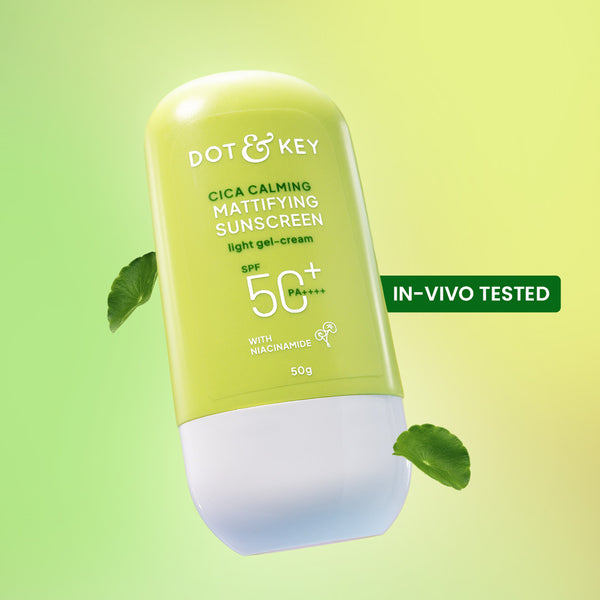
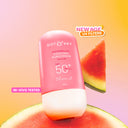
If you are looking for a ready example, a product like Dot & Key Cica + Niacinamide Matte Gel Sunscreen offers a water-light texture combined with niacinamide and a matte-finish complex, designed to shield skin without contributing to shine. It illustrates the gel sunscreen category well, but any product that meets the above criteria can be an excellent choice.
How to Apply Gel Sunscreen on Oily Skin Without the Shine
Even the best gel sunscreen can feel uncomfortable if application technique goes wrong. Follow these steps for the best results:
- Start with a clean, toned base. Use a gentle cleanser suited to oily skin, and consider a lightweight exfoliating toner a few times a week to keep pores clear.
- Apply a lightweight, oil-free moisturiser if needed. Not every oily skin type needs a separate moisturiser; many gel sunscreens provide enough hydration. If your skin feels tight after cleansing, use a few drops of a gel-based or hyaluronic acid moisturiser and let it absorb for 2–3 minutes.
- Apply the gel sunscreen generously. A common mistake is using too little. For the face and neck, aim for approximately 1.25 ml (about a quarter teaspoon) total. Dot it across the forehead, cheeks, nose, and chin, then blend outward.
- Allow it to set. Wait 3–5 minutes before applying makeup or moving on. This minimises pilling.
- Reapply strategically. For daily wear, a lightweight gel SPF can be reapplied directly over clean skin or gently patted over makeup using a sponge or fingertips. If your gel sunscreen is not water-resistant and you’re outdoors or sweating, reapply every 2 hours.
Common Mistakes That Undermine Your Sun Protection
- Skipping moisturiser altogether when the skin is dehydrated: This can trigger rebound oil production, making midday shine worse. Listen to your skin’s tightness cues.
- Using too little product: Sunscreen protection is dose-dependent. Under-application is the most common reason SPF fails.
- Layering on top of heavy serums without proper wait time: Thick, oil-based serums can prevent the gel from forming an even film, leading to patchy protection and pilling.
- Neglecting reapplication: A matte finish in the morning doesn’t last all day. Carry a gel- or powder-based SPF for touch-ups.
- Assuming all gel sunscreens are water-resistant: They are not. If you’ll be swimming or perspiring heavily, select a labelled “water-resistant” formula, even if it means a slightly richer texture.
Choosing the Right Gel Sunscreen for Your Oily Skin Subtype
Not all oily skin is identical. Use this quick decision guide to narrow your options:
- Acne-prone, easily congested skin: Prioritise clearly labelled non-comedogenic, oil-free gel sunscreens. Niacinamide is a bonus for its calming and oil-balancing properties. Avoid added fragrance and heavy silicone blends that may trap debris.
- Dehydrated oily skin (shiny yet feels tight): Look for a gel-cream hybrid that combines humectants like glycerin with a mattifying finish. You may prefer a two-step routine: a light hydrating serum under a pure gel SPF.
- Sensitive oily skin with redness: Choose a mineral gel sunscreen that relies on zinc oxide, ideally alcohol-free and fragrance-free. The gel vehicle helps minimise the chalkiness sometimes associated with mineral formulas.
- Oily skin in very humid environments: A pure, fast-drying gel with silica for oil absorption is your best bet. Consider a water-resistant gel lotion if humidity is accompanied by outdoor activity.
Frequently Asked Questions
Does gel sunscreen clog pores?
Quality gel sunscreens formulated as non-comedogenic and oil-free are unlikely to clog pores. The water-based texture and absence of heavy occlusives make them safer for oily and acne-prone skin. Still, individual reactions vary, so it’s wise to check the full ingredient list for known personal triggers.
Is gel sunscreen better than cream sunscreen for oily skin?
For most oily skin types, gel sunscreen is more comfortable and less likely to cause shine or congestion. Cream sunscreens often contain richer emollients that can feel heavy. However, if your skin is dehydrated or you live in a dry climate, a lightweight lotion or gel-cream might suit you better than an ultra-dry gel.
Can I use gel sunscreen under makeup?
Yes. Gel sunscreens are among the best bases for makeup because they dry quickly and leave a smooth, non-tacky surface. Allow the gel to set for a few minutes before applying foundation, and use a patting motion rather than rubbing to avoid disrupting the SPF film.
Do I still need a moisturiser if my gel sunscreen contains hydrating ingredients?
It depends on your skin’s hydration needs. If the gel sunscreen keeps your skin comfortable without tightness or flaking, you can skip a separate moisturiser. If your skin feels dry or dehydrated, apply a lightweight, oil-free moisturiser underneath.
Are gel sunscreens water-resistant?
Not all are. While some gel and gel-lotion hybrids are formulated to be water-resistant (40 or 80 minutes), many everyday gel sunscreens are not. Always check the label if you need water resistance for swimming or heavy sweating.
Is gel sunscreen safe for sensitive skin?
Yes, provided you choose an alcohol-free, fragrance-free formulation. Mineral gel sunscreens with zinc oxide can be particularly suitable because zinc oxide is well tolerated and is not known to commonly cause irritation.