

What is AHA and BHA? A Clear Guide to Skincare Acids
 05 Oct 2026

Ever wondered what AHA and BHA actually do for your skin? You’ve probably seen them in exfoliating serums, toners, and face washes, but choosing between them can be confusing. Here’s the simple breakdown: AHAs work mainly on the skin’s surface to help improve texture, dullness, and uneven skin tone, while BHAs can penetrate oil-filled pores, making them especially useful for oily and acne-prone skin. Neither is better than the other. It all comes down to your skin type, your concerns, and what your skin can comfortably tolerate.
So, how do you know which one belongs in your routine? The key is understanding how these exfoliating acids work and what they can do for your skin. In this guide, we’ll break down the differences between AHAs and BHAs, their benefits, how to choose the right one for your skin, and how to use them without over-exfoliating or compromising your skin barrier.
What Are AHAs and BHAs?
Both AHAs and BHAs are hydroxy acids. They are classified by where a hydroxyl group sits on the molecule, and that small structural difference changes how they behave on skin.
Alpha-hydroxy acids (AHAs) are water-soluble. Common examples include glycolic acid, lactic acid, and mandelic acid. They primarily act on the surface of the skin, loosening the "glue" that holds dead skin cells together. This helps the outer layer shed more evenly, which can make skin look smoother and brighter.
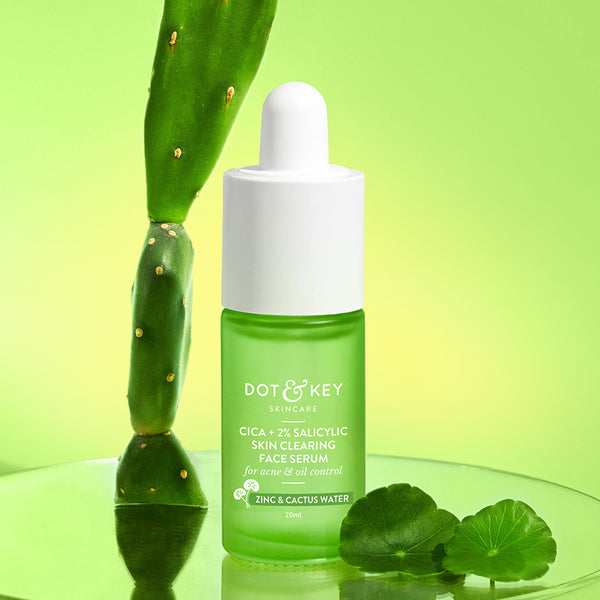
Beta-hydroxy acids (BHAs) are lipid-soluble. Salicylic acid is the most widely used BHA. Because it dissolves in oil, it can travel into sebaceous follicles and pores, where it helps break down excess sebum and keratin build-up.
A simple way to remember the difference: AHAs work on the surface; BHAs work inside the pore.
How Do AHAs and BHAs Work?
AHAs promote exfoliation by weakening the bonds between dead skin cells in the upper layer of the epidermis. This process is thought to involve calcium ion chelation, which reduces intercellular adhesion and encourages desquamation, the natural shedding of skin cells. Some AHAs, such as glycolic acid and lactic acid, also support collagen synthesis and epidermal turnover in laboratory and ex vivo studies, which helps explain their use for texture and photoaging.
BHAs have keratolytic, antimicrobial, and anti-inflammatory properties. Salicylic acid, in particular, is lipid-soluble and can penetrate sebaceous follicles. This makes it useful for comedonal acne, blackheads, and oily skin. It also has a mild photoprotective effect in some studies, though this does not replace sunscreen.
It is important to separate established clinical use from laboratory findings. AHAs and BHAs are well established as superficial chemical exfoliants. Some of their broader anti-ageing and pigment-inhibiting mechanisms are supported by in vitro and ex vivo research, but these findings should not be read as guarantees of clinical results in every person.
AHA vs BHA: Key Differences at a Glance
|
Feature |
AHAs |
BHAs |
|
Solubility |
Water-soluble |
Oil-soluble |
|
Primary working site |
Skin surface (epidermis) |
Pores and sebaceous follicles |
|
Common examples |
Glycolic acid, lactic acid, mandelic acid |
Salicylic acid |
|
Main benefits |
Texture, dullness, uneven tone, fine lines, superficial pigmentation |
Blackheads, clogged pores, oily skin, acne-prone skin |
|
Best suited to |
Normal, dry, sun-damaged, or dull skin; superficial pigmentation |
Oily, combination, and acne-prone skin |
|
Irritation potential |
Higher with small molecules like glycolic acid; lower with larger molecules like mandelic acid |
Generally well tolerated at cosmetic concentrations, but can dry or sting |
|
Sun sensitivity |
AHAs can increase sun sensitivity; daily sunscreen is essential |
Salicylic acid is not a strong photosensitiser, but sunscreen is still essential |
The table is a starting point, not a prescription. Many people use different acids on different areas of the face or alternate them across the week.
Types of AHAs and What They Do
Not all AHAs behave the same way. Their molecular size affects how quickly and deeply they penetrate, which in turn affects how irritating they can be.
Glycolic acid has the smallest molecule among common AHAs. It penetrates quickly and exfoliates efficiently. It is widely used for dullness, texture, and superficial pigmentation, but it is also the AHA most likely to sting or irritate sensitive skin.
Lactic acid has a larger molecule than glycolic acid, so it exfoliates more gently. It also has humectant properties, meaning it can help skin hold on to water. This makes it a reasonable option for people with normal-to-dry skin who want exfoliation without tightness.
Mandelic acid is larger still and is often described as gentler. It is sometimes recommended for sensitive or acne-prone skin, though the evidence base for mandelic acid specifically is smaller than for glycolic acid.
What About BHAs?
Salicylic acid is the BHA you will see most often in skincare. At cosmetic concentrations, it is used to reduce blackheads, refine the look of pores, and improve mild acne. A split-face randomised controlled trial comparing 30% glycolic acid peels with 30% salicylic acid peels for mild-to-moderate acne found that both were effective, but the salicylic acid peel had sustained effectiveness and fewer side effects. That study used professional peel strengths, not over-the-counter products, but it illustrates the pore-focused role of salicylic acid.
Salicylic acid is also used in body washes and toners for back acne and keratosis pilaris. At concentrations up to 2% in leave-on products, it is generally well tolerated by most skin types.
Which One Should You Choose?
The choice comes down to your main concern and your skin's tolerance.
Choose an AHA if:
• Your main concern is dullness, rough texture, or uneven tone.
• You have superficial pigmentation or post-acne marks that sit on the surface.
• Your skin is normal, dry, or sun-damaged rather than actively oily.
• You want smoother-looking skin and are willing to use sunscreen consistently.
Choose a BHA if:
• Your main concern is blackheads, clogged pores, or mild acne.
• Your skin is oily or combination, especially in the T-zone.
• You want to refine the look of enlarged pores.
• You have tried AHAs but found them too irritating.
You may be able to use both if your skin is resilient and you introduce them carefully. A common approach is to use a BHA on oily areas and an AHA on drier areas, or to alternate them on different nights rather than layering them in the same routine. Do not start with both at once.
How to Use AHAs and BHAs Safely
Safe use matters more than strength. Most problems with AHAs and BHAs come from using them too often, at too high a concentration, or without supporting the skin barrier.
Start with one product and one frequency. Begin with a leave-on product two nights a week. If your skin tolerates it after two to three weeks, you can gradually increase to three nights a week. Daily use is not necessary for most people and can increase the risk of irritation.
Do a patch test first. Apply a small amount behind your ear or on your jawline for two to three nights before using it on your whole face. This is especially important if you have sensitive skin or a history of eczema.
Use sunscreen every morning. AHAs can increase the skin's sensitivity to ultraviolet radiation. Without daily broad-spectrum sunscreen, the pigmentation you are trying to fade can worsen. This is particularly relevant for Indian skin, where post-inflammatory hyperpigmentation is a common consequence of irritation and unprotected sun exposure.
Do not layer multiple exfoliating acids in one routine. Using an AHA, a BHA, and a retinoid in the same evening is a recipe for barrier disruption. If you use a retinoid, alternate it with your acid nights rather than stacking them.
Moisturise after acid use. Acids can temporarily increase water loss from the skin. A simple, fragrance-free moisturiser with ceramides or glycerin helps support the barrier overnight.
Avoid exfoliating before long outdoor exposure. If you know you will be in strong sun for hours, skip the acid that morning or the night before. AHAs especially can make sunburn more likely.
What About Indian Skin Specifically?
Indian skin, particularly Fitzpatrick types IV to VI, has a higher tendency to develop post-inflammatory hyperpigmentation after any kind of irritation or inflammation. This does not mean AHAs and BHAs are unsafe. It means the margin for error is smaller, and irritation must be avoided rather than pushed through.
India's heat, humidity, and pollution add another layer. Humid weather can make heavy or occlusive acid products feel uncomfortable, and sweat can increase the chance of stinging. A lightweight, non-comedogenic formulation is often easier to tolerate than a thick cream or a high-strength peel.
For many people in India, once-a-week use of a mild AHA or BHA is enough to maintain smoother texture without tipping the skin into irritation. If you are using a higher-strength product, treat it as a short-contact treatment rather than a leave-on product, and follow the instructions carefully.
Signs You Are Over-Exfoliating
Over-exfoliation is more common than true "acid purging." It happens when the skin barrier is stripped faster than it can repair itself.
Watch for these signs:
• Stinging or burning when you apply products, even water.
• Persistent redness that does not settle within an hour.
• Tightness or a waxy shine that feels unnatural.
• New clusters of small bumps or breakouts.
• Dry, flaky patches alongside oily areas.
• Increased sensitivity to products you previously tolerated.
If these signs appear, stop all exfoliating acids for one to two weeks. Use a gentle cleanser, a barrier-supporting moisturiser, and sunscreen. Resume only when the skin feels calm, and restart at a lower frequency.
Are AHAs and BHAs Safe During Pregnancy?
This is a common concern, and the answer depends on the acid and the concentration.
AHAs such as glycolic acid and lactic acid are generally considered low-risk at cosmetic concentrations (up to around 10% in leave-on products). They are not known to be teratogenic, and systemic absorption from topical use is minimal. The main caveat is increased sun sensitivity, which matters because pregnancy can also increase the risk of melasma.
Salicylic acid (BHA) is chemically related to aspirin. Oral aspirin is restricted in pregnancy, especially in the third trimester. Topical salicylic acid at low concentrations (up to 2%) over small areas is generally considered acceptable by many clinicians, but high-strength peels and large-area daily use should be avoided. If you are pregnant or breastfeeding, ask your doctor or dermatologist before starting any new acid product, especially a peel or a medicated body wash.
When to See a Dermatologist
Mild texture issues, blackheads, and dullness can often be managed with over-the-counter AHAs or BHAs. But some situations need professional guidance:
• Acne that is moderate to severe, painful, or leaving deep marks.
• Pigmentation that is spreading, changing, or not responding to gentle exfoliation.
• Persistent redness, stinging, or barrier damage that does not settle after two weeks of stopping actives.
• A history of eczema, rosacea, or sensitive skin that reacts to most products.
• Any concern about a mole or a changing skin lesion.
A dermatologist can assess your skin type, rule out conditions that mimic acne or pigmentation, and recommend a treatment plan that matches your tolerance and climate.
FAQ
Can I use AHA and BHA on the same day?
It is possible for resilient skin, but it is not a good starting point. Use them on different nights, or use a BHA on oily areas and an AHA on drier areas. Layering them in the same routine increases the risk of irritation.
Do AHAs and BHAs make your skin thinner?
No. At appropriate concentrations, they improve the skin's barrier function by encouraging more organised shedding of dead cells. Overuse can damage the barrier, but correct use does not thin the skin permanently.
Which acid is better for Indian skin?
Neither is universally better. Indian skin benefits from a cautious approach with either. If you have oily, acne-prone skin, a BHA is often more targeted. If you have dullness or superficial pigmentation, a gentle AHA such as lactic or mandelic acid may be more suitable. Sun protection is non-negotiable with either.
Can I use an AHA or BHA every day?
Most people do not need to. Two to three nights a week is sufficient for maintenance for many skin types. Daily use increases the risk of barrier disruption, especially in humid climates.
What percentage should a beginner start with?
For AHAs, start with a product containing 5% to 10% glycolic acid or 5% to 10% lactic acid. For BHAs, 0.5% to 2% salicylic acid is the typical over-the-counter range. Higher percentages are not inherently better and are best used under professional guidance.
Does salicylic acid make skin sun-sensitive?
Salicylic acid is not considered a strong photosensitiser, but it can make skin drier and more reactive. Daily sunscreen is still essential because unprotected sun exposure worsens pigmentation and ageing.
Can I use AHA or BHA with vitamin C?
Yes, but not in the same layer if your skin is sensitive. Use vitamin C in the morning and an AHA or BHA at night. Both can be acidic, and combining them in one routine can sting.