

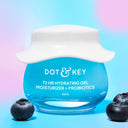
What is Non-Comedogenic? A Guide to Skincare Labels
 29 Sep 2026

The term "non-comedogenic" is one of the most common labels you'll spot on skincare products, but what does it actually mean? For many, it sounds like a promise that a product won't clog pores or cause breakouts. The reality is a little more nuanced. While a non-comedogenic label can be a helpful starting point, it doesn't guarantee that a product will work perfectly for every skin type.
Understanding what non-comedogenic really means can help you look beyond the label and make smarter choices for your skin. In this guide, we'll break down what the term means, how products get this label, what it can and can't tell you, and what to keep in mind when choosing skincare, especially if you're prone to clogged pores or breakouts.
What Are Comedones?
To understand non-comedogenic, we first need to understand a comedone. A comedone is the technical term for a clogged hair follicle, or pore. This blockage is the precursor to most forms of acne.
● Microcomedone: The invisible beginning of all acne. It forms when dead skin cells and sebum begin to accumulate inside the pore.
● Open Comedone (Blackhead): The blockage is exposed to air, causing the sebum and skin cells to oxidise and turn dark.
● Closed Comedone (Whitehead): The pore opening is sealed over, trapping the blockage beneath the skin's surface.
A product is considered comedogenic if it promotes the formation of these plugs. A non-comedogenic product is formulated with the intention of not doing so.
What Does "Non-Comedogenic" Actually Mean?
At its core, a non-comedogenic product claims to be formulated with ingredients that are less likely to clog pores and trigger the formation of comedones. The intent is to signal to those with oily or acne-prone skin that the product is a safer choice.
The Critical Lack of Regulation
Herein lies the central problem: there is no regulatory body, in the UK, the EU, or the US, that approves or standardises the use of this claim. The term is essentially industry self-regulation. A brand can label a product non-comedogenic based on their own interpretation of available research, an ingredient-level analysis, or a specific test they commissioned. This means one brand's "non-comedogenic" may be based on a different standard than another's.
How Is Comedogenicity Tested?
To understand why the label isn't a guarantee, you must understand the methods used to generate it.
The Rabbit Ear Assay (REA)
The traditional method involved applying a test ingredient to the sensitive inner ear of a rabbit. After a set period, researchers would examine the skin for signs of clogged pores. This method is responsible for the "comedogenic scale" you may have seen online, rating ingredients from 0 (non-clogging) to 5 (highly clogging). While foundational, the REA has significant limitations:
● Biological Differences: Rabbit skin is not human skin. It is far more sensitive and reactive, which can overstate an ingredient's potential to clog human pores.
● Unrealistic Application: In the test, ingredients were often applied in their pure, neat form at 100% concentration. In a finished product, a comedogenic ingredient might be present at 1–2%, which dramatically changes its behaviour.
Human Comedogenicity Tests
More modern tests involve applying products to the backs of human volunteers with acne-prone skin. While more relevant, these tests are also imperfect. They often involve occlusion (covering the area with a plaster), which can create a hot, humid environment that artificially increases the likelihood of clogging. Furthermore, results from a small sample of volunteers cannot predict how the ingredient will behave on your unique skin.
The Problem with Ingredient-Level Lists
Many online resources publish lists of "pore-clogging ingredients" with their comedogenic ratings. While a useful starting point, these lists can be misleading. The comedogenicity of a final product is not simply the sum of its parts. It is the result of a complex interaction between the ingredient's concentration, its interaction with other ingredients in the formula, the overall pH of the product, and the manufacturing process.
The Real Culprits: Common Comedogenic Ingredients
Despite the nuances, decades of research and clinical observation have identified certain ingredients with a higher propensity to clog pores, especially for those already prone to breakouts.
|
Ingredient |
Common Purpose |
Why It's Problematic |
Common Products |
|
Isopropyl Myristate |
Emollient, texture enhancer, reduces greasiness |
Has a very high comedogenic rating in traditional tests; known to be a strong pore-clogger. |
Primers, sunscreens, moisturisers |
|
Coconut Oil |
Rich moisturiser, natural emollient |
Highly occlusive and has a high comedogenic rating for many individuals. |
Body butters, hair products, some facial oils |
|
Cocoa Butter |
Occlusive moisturiser, softens skin |
Very rich and occlusive; can easily trap dead skin cells and sebum. |
Heavy creams, body lotions |
|
Lanolin |
Emollient, water-binding agent |
Derived from sheep's wool, it is a complex substance that can be irritating and clogging. |
Heavy moisturisers, lip balms |
|
Certain Algae Extracts |
Antioxidant, hydrating |
While beneficial, some types of algae have demonstrated a potential to be comedogenic. |
Seaweed masks, hydrating serums |
The Nuance of "Pore-Clogging" Ingredients
It is crucial not to fall into a mindset of "good" vs. "bad" ingredients. For example, a person with very dry skin may tolerate coconut oil beautifully, while it causes immediate congestion for someone with oily skin. Furthermore, an ingredient like dimethicone, a silicone, often gets a bad reputation, but it is not inherently comedogenic. Its large molecular size prevents it from penetrating the pore. Problems usually arise from trapping other comedogenic ingredients against the skin, rather than from the silicone itself.
Non-Comedogenic vs. Oil-Free: A Crucial Distinction
A common misconception is that non-comedogenic and oil-free are the same thing. This false belief causes many people with oily skin to avoid all oils, potentially missing out on beneficial ingredients and damaging their skin barrier.
|
Feature |
Non-Comedogenic |
Oil-Free |
|
Meaning |
Formulated to not clog pores. |
Formulated without any oils (mineral, vegetable, or synthetic). |
|
Claim Focus |
The result on skin (absence of clogging). |
The absence of an ingredient category. |
|
Regulation |
None. |
None. |
|
Potential for Clogging |
Low risk, but not a guarantee. |
Low risk from oils, but can still contain non-oil, comedogenic ingredients (like certain fatty acids). |
|
Beneficial Oils |
May contain non-comedogenic oils like squalane or rosehip. |
Excludes all oils, even ones that might be beneficial. |
The key takeaway is that not all oils are comedogenic. Squalane, hemi-squalane, and rosehip oil are examples of oils with a low comedogenic profile that can be exceptionally beneficial even for oily skin types.
A Practical Framework for Choosing Non-Comedogenic Products
Instead of relying solely on the label, you can take a more active, informed approach.
Step 1: Understand Your Skin's Baseline
Before introducing any new product, know your skin. Does it feel tight after washing? Are you oily in the T-zone only? Are your breakouts primarily blackheads or inflamed, red pimples? Understanding your starting point helps you monitor for changes.
Step 2: Analyse the Ingredient List (Not Just the Label)
The ingredient list is your most reliable source of truth. Check the first 5–7 ingredients, as they make up the bulk of the formula. Use the list of common offenders (like Isopropyl Myristate or Coconut Oil) as a filter. If you see a known high-risk ingredient in the top portion of the list, proceed with caution.
Step 3: Consider the Product's Format
The vehicle matters. Generally, for those prone to clogged pores:
● Gels and fluids are the lightest and least likely to feel heavy.
● Lotions are a step up in richness.
● Creams are the heaviest and most likely to contain a higher concentration of occlusive agents.
This does not mean all creams are bad, but they require more scrutiny for clog-prone skin.
Step 4: The Essential Patch Test
This is the most important step that almost everyone skips. The final performance of a product cannot be predicted by a label. A simple at-home patch test can save you from a full-face breakout.
● Apply a small amount of the product to a discreet area where you typically break out (e.g., the jawline, behind the ear, or on the cheek).
● Repeat the application daily for 7–10 days.
● Monitor the area closely for any new blackheads, whiteheads, or red bumps.
● If the area remains clear, it is significantly more likely the product will agree with the rest of your face.
When Non-Comedogenic Products Still Break You Out
If you have chosen a product labelled non-comedogenic, followed all the steps, and still experience a breakout, it is not a personal failure. There are two primary reasons this can happen.
Irritation vs. Comedogenicity
Sometimes, a breakout is not a true comedone. An inflammatory response to an ingredient (like a fragrance, preservative, or an active like retinol) can trigger small, red, inflamed bumps known as a papulopustular reaction. This looks like acne but is a form of contact dermatitis. The mechanism is irritation, not pore-clogging.
Other Culprits
● Fragrance & Essential Oils: Are among the most common causes of skin irritation.
● Active Ingredients: Introducing active ingredients like exfoliating acids (AHAs/BHAs) or retinoids too quickly can cause a process called "purging," which brings pre-existing clogs to the surface.
● Over-Exfoliation: Damaging your skin barrier through aggressive washing or exfoliation can make your skin more reactive to everything, leading to breakouts from products that would otherwise be fine.
If you suspect a product is causing a reaction, stop using it. If symptoms persist, consult a dermatologist.
Product Examples: What a Well-Formulated Moisturiser Might Look For
When seeking a moisturiser suitable for oily or clog-prone skin, the ingredient list becomes paramount. Instead of recommending a specific brand, here is what a well-formulated, gel-based moisturiser might contain:
● Water as the first ingredient.
● Glycerin or Hyaluronic Acid for lightweight hydration.
● Niacinamide to help regulate sebum production and soothe the skin.
● Dimethicone for a silky, non-greasy finish and to prevent moisture loss.
A formula like this avoids known high-risk occlusives and relies on non-comedogenic humectants and light emollients.
Conclusion: The Label is a Starting Point, Not a Guarantee
"Non-comedogenic" is a helpful filter, but it is not a destination. It signals a brand's intent to formulate a product that is less likely to clog pores. The true test of any skincare product is how it performs on your unique skin. By understanding the science of comedones, the limitations of testing, and the nuances of product formulations, you can move beyond the fear and confusion and make decisions based on evidence, analysis, and careful observation. The most reliable skincare tool you have is not a label; it is your own informed and attentive routine.
Frequently Asked Questions
Is dimethicone bad for acne-prone skin?
No, dimethicone is generally considered non-comedogenic. It is a silicone that creates a breathable, protective barrier on the skin. Due to its large molecular size, it cannot penetrate and clog pores. Problems can arise if a product containing dimethicone also contains a known comedogenic ingredient, which the silicone may then trap against the skin.
What is the comedogenic scale?
The comedogenic scale is a rating system (typically 0–5) that attempts to rank how likely an individual ingredient is to clog pores. It was developed from early rabbit ear tests. While it can be a useful reference, it is limited because it tests ingredients in isolation, at high concentrations, on animal skin that is very different from human skin. It should be used as a guideline, not a strict rule.
Are all natural oils comedogenic?
No. While some oils like coconut and wheat germ oil have a high propensity to clog pores, others are widely considered to have a low comedogenic profile. Squalane, rosehip oil, argan oil, and hemi-squalane are often well-tolerated by acne-prone skin. The source and refinement of the oil also matter.
If a product says "non-comedogenic," is it guaranteed I won't break out?
No. There is no regulatory standard for the term, so it is not a guarantee. A product's ability to cause breakouts depends on the final formulation, the concentration of its ingredients, and your individual skin's unique reaction. It is best to use the label as an initial filter and always perform a patch test before applying a new product to your entire face.
How long does it take for a clogged pore to form after using a comedogenic product?
It varies. A reaction from an irritating product can happen within 24–48 hours. However, the formation of a true comedone (blackhead or whitehead) is a slower process, often taking two to four weeks of consistent use for the blockage to become visible on the skin's surface.