


How to Control Oily Skin in Humid Weather? A Practical Guide
 17 Aug 2026

Hot and humid weather can make oily skin feel even oilier. Sweat mixes with sebum, skincare can start feeling heavy, and that fresh morning look can turn shiny before you know it.
But managing oily skin isn’t about scrubbing harder or skipping moisturiser. It’s about switching up your routine to suit the weather. Think lightweight textures, the right ingredients, and simple skincare that keeps excess shine in check without stripping your skin.
In this guide, we’ll break down why humidity can make your skin feel oilier, which ingredients can help, what to avoid, and how to build a simple routine that keeps your skin feeling fresh, balanced, and comfortable all day.
Quick Answer: The Humid-Weather Rule of Thumb
In humid weather, swap rich textures for lightweight ones, keep hydration in your routine, and let targeted ingredients — niacinamide, salicylic acid and zinc, do the work of controlling visible oil. Cleanse twice daily maximum, use an oil-free SPF 50+ sunscreen every morning, and reach for blotting papers rather than over-washing when shine appears during the day.
Why Humid Weather Makes Oily Skin Harder to Manage
Sebum and sweat are two separate things
Sebum is an oily substance produced by the sebaceous glands. It is not dirt; it is part of the skin's natural protective system. Sweat is a water-based fluid produced by sweat glands to help regulate body temperature.
The two fluids have different jobs, but they interact on the skin's surface. In humid weather, that interaction is the root of the problem.
Why humidity changes how oily your skin looks
When the air is already saturated with moisture, sweat cannot evaporate efficiently from the skin's surface. Instead of drying, sweat sits on the skin and mixes with sebum. Together they form a continuous film that spreads more evenly across the face and looks shinier than sebum alone.
Humidity does not necessarily make the sebaceous glands produce dramatically more oil on its own. What it changes is the environment on the skin's surface: less evaporation, more residual moisture, and a visible sheen that is easy to misread as “more oil.”
This distinction matters because it changes the strategy. If the problem were purely excess sebum, the answer might be to strip oil aggressively. But because sweat and slowed evaporation play a major role, the answer is to manage the surface environment with lightweight, breathable products, not to dehydrate the skin.
Heat plays a role too
Some research suggests that higher temperatures may be associated with increased sebum excretion in some people, although the evidence is not strong enough to claim a direct cause-and-effect relationship for everyone. Heat, rather than humidity alone, appears to be a more relevant trigger for increased oil output in certain individuals.
In practice, this means humid summer weather is a double challenge: heat may modestly increase sebum production in some people, while humidity prevents sweat from evaporating. The combined effect is exactly what many people describe as “my skin feels oilier in this weather.”
The Four Pillars of Humid-Weather Oily Skin Care
1. Cleanse without stripping
The goal of cleansing is to remove sweat, sebum, sunscreen and pollution from the surface of the skin without damaging the skin barrier.
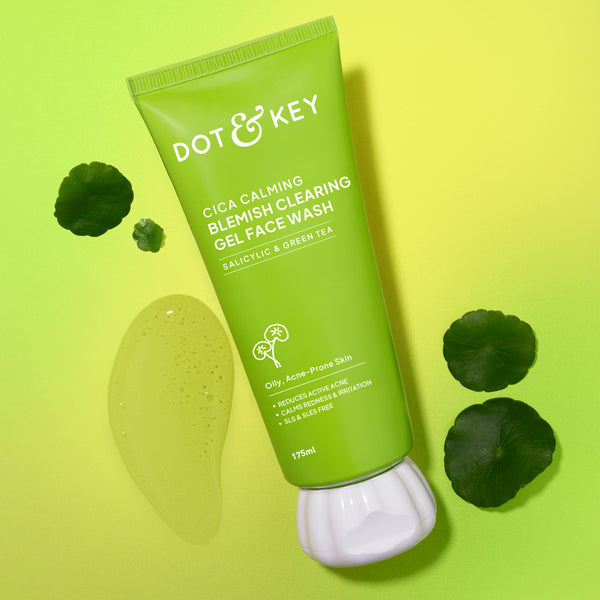
A gentle foaming cleanser or a gel cleanser is usually sufficient. Avoid cleansers that leave the skin feeling tight, squeaky or “squeaky clean,” because that tightness is a sign of barrier disruption. When the barrier is compromised, skin may respond by producing more oil in an attempt to compensate — a cycle known as rebound oil.
Practical advice: Cleanse twice daily. If you exercise heavily in humid weather, a third cleanse immediately after the workout is fine, but do not wash your face every time it looks shiny. That is what blotting papers are for.
2. Hydrate with lightweight layers
Oily skin still needs hydration. Hydration refers to water content in the skin, not oil. When skin loses water through the barrier, it can feel tight, look dull and react unpredictably.
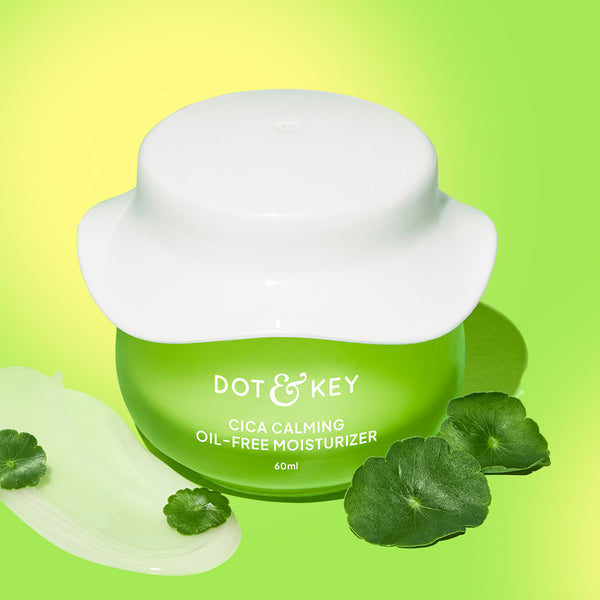
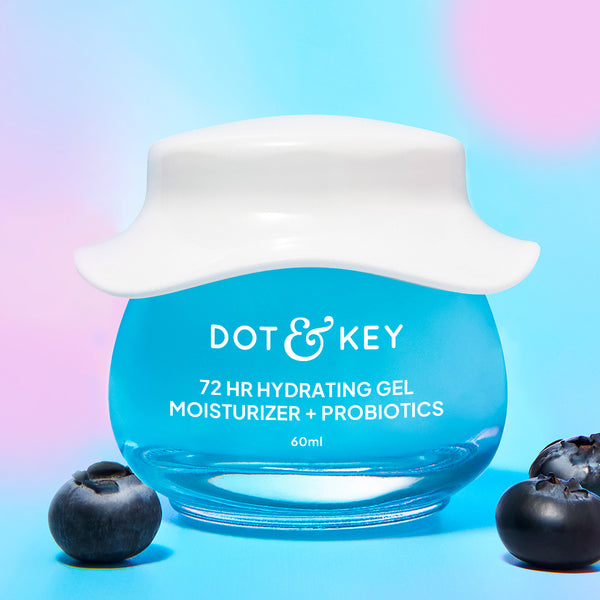
In humid weather, the solution is not to skip moisturiser but to switch to a lighter format: a gel, gel-cream or lightweight lotion instead of a rich cream.
Why this works: Humectant ingredients such as hyaluronic acid and glycerin can draw moisture from the air as well as from deeper skin layers. In humid conditions, this works to your advantage — the surrounding air provides a reservoir of moisture that humectants can pull toward the skin.
3. Protect with oil-free SPF
Sun protection is non-negotiable, but many sunscreens feel heavy, sticky or greasy on oily skin in humid weather.
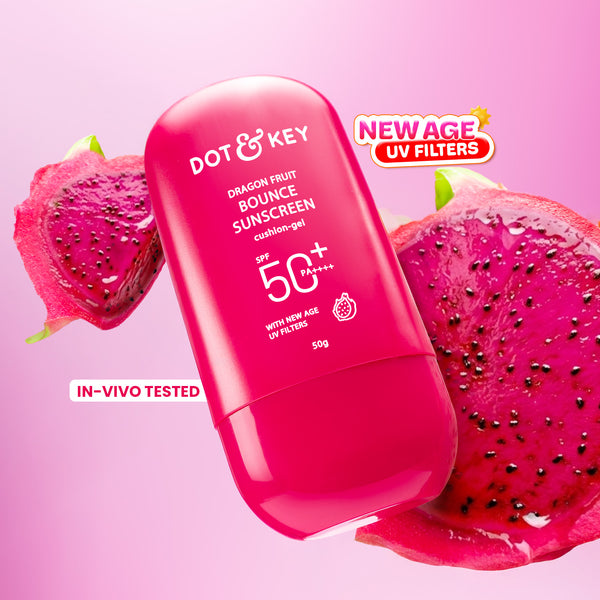
Look for sunscreens labelled as oil-free, non-comedogenic, or formulated for oily or combination skin. Gels, fluids and lightweight lotions tend to wear better in humidity than rich creams. Zinc oxide-based mineral sunscreens can have a naturally mattifying effect, although some formulations may feel heavier than chemical options.
Practical advice: Apply SPF 30+ every morning as the final step of your skincare routine. If you are outdoors for extended periods, reapply every two hours. A powder sunscreen or a mattifying SPF mist can make midday reapplication more practical over makeup or an already-oily complexion.
4. Absorb oil throughout the day
Blotting papers are one of the most underrated tools for oily skin in humid weather. They remove excess surface oil without disturbing makeup or triggering the rebound cycle caused by over-washing.
Pressed or loose powder can also help manage shine, but layering powder repeatedly throughout the day can build up and look cakey. Blotting papers remove oil cleanly.
Practical advice: Keep blotting papers in your bag. Use them when shine appears, then reapply powder or powder sunscreen only if you need coverage. Do not touch your face with your hands; fingertips carry oil and bacteria.
A Simple Morning Routine for Humid Weather
This routine is designed to be completed in five minutes and to leave skin protected, hydrated and as matte as possible.
|
Step |
Product |
What to look for |
|
1. Cleanse |
Gentle foaming or gel cleanser |
No harsh sulphates, no “squeaky clean” feeling |
|
2. Treat |
Niacinamide serum or zinc-based treatment |
Lightweight, fast-absorbing, 2–5% niacinamide |
|
3. Hydrate |
Gel or gel-cream moisturiser |
Oil-free, humectant-rich |
|
4. Protect |
Oil-free SPF 30+ sunscreen |
Non-comedogenic, matte or semi-matte finish |
If your skin tolerates it, a salicylic acid product can be used in the morning two or three times a week as an alternative to the niacinamide serum. However, if you are using a salicylic acid cleanser or exfoliant at night, do not double up in the morning — over-exfoliation is a real risk in summer.
A Simple Evening Routine for Humid Weather
Evening is the time to remove the full day's accumulation of sweat, sebum, sunscreen and pollution, and to use any exfoliating or treatment ingredients that are best kept away from daytime sun.
|
Step |
Product |
What to look for |
|
1. First cleanse |
Micellar water, cleansing oil or balm |
Removes SPF and makeup effectively |
|
2. Second cleanse |
Gentle foaming or gel cleanser |
The same gentle cleanser from morning |
|
3. Treat |
Salicylic acid or niacinamide |
Alternate evenings if using both |
|
4. Hydrate |
Lightweight gel or gel-cream moisturiser |
Barrier-supporting, non-occlusive |
If you are using a salicylic acid product at night, start at two to three nights per week and increase only if your skin tolerates it without tightness, redness or flaking.
Ingredients That Can Help in Humid Weather
The following ingredients are commonly recommended for oily skin. The evidence behind each varies, and not every ingredient works for every person. The key is to introduce one new product at a time and observe how your skin responds.
1. Niacinamide (vitamin B3)
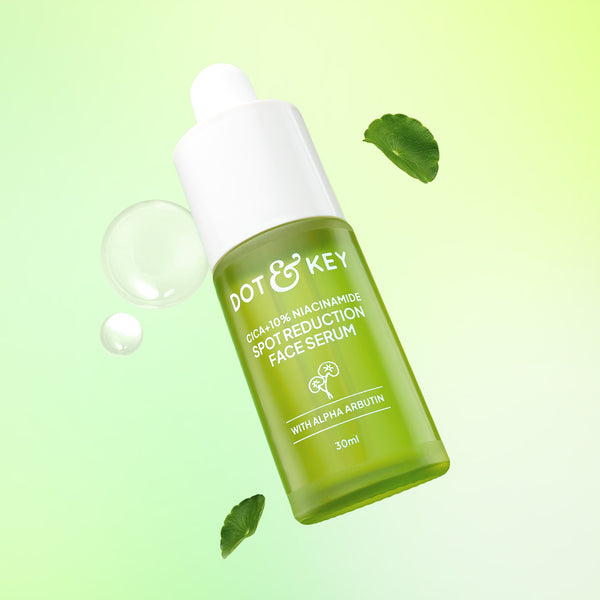
Niacinamide is one of the better-studied ingredients for oily skin. One frequently cited clinical trial reported that a 2% niacinamide formulation reduced sebum excretion after two to four weeks of regular use. The strength of evidence is moderate, and individual results vary, but niacinamide is generally well tolerated and can be used daily.
Niacinamide also supports the skin barrier and may help reduce the appearance of enlarged pores over time. It is a useful first-line ingredient for oily skin in humid weather because it addresses oiliness without being harsh.
How to use: Apply a niacinamide serum or moisturiser in the morning or evening. Concentrations of 2–5% are common; higher percentages exist but are not necessarily better.
2. Salicylic acid (BHA)
Salicylic acid is a beta-hydroxy acid that is oil-soluble, meaning it can work within the pore rather than only on the skin surface. It is widely used to help clear pore blockages and may reduce the appearance of enlarged pores.
In humid weather, salicylic acid is particularly useful because sweat and sebum can combine to create the kind of pore blockages that lead to blackheads and breakouts. A salicylic acid cleanser, toner or short-contact treatment can help keep pores clear.
How to use: Start two to three nights per week. If using a leave-on product, apply it after cleansing and before moisturising. Do not combine with other exfoliating acids on the same night.
3. Zinc compounds
Zinc compounds, including zinc PCA and zinc oxide, are frequently included in formulations for oily and blemish-prone skin. Some evidence suggests zinc may help regulate sebum production, but the overall strength of evidence is moderate rather than definitive.
In sunscreens, zinc oxide provides broad-spectrum UV protection and can have a mattifying effect, which is a practical bonus in humid weather.
How to use: Look for zinc PCA in moisturisers or serums, or zinc oxide in mineral sunscreens. Zinc-based products are often well tolerated.
4. Kaolin and bentonite clay
Kaolin and bentonite clays are absorbent minerals. When applied as a mask, they can temporarily absorb surface oil and leave skin looking more matte. This effect is short-term and does not change underlying sebum production, but it can be useful before an event or on a particularly humid day.
How to use: Use a clay mask once a week, or spot-apply to the T-zone. Do not leave it on until it cracks — rinse off as soon as it begins to feel tight. Overuse can dry out the barrier and trigger rebound oil.
5. Hyaluronic acid and glycerin
These humectants attract water. In humid weather, they can perform particularly well because they can draw moisture from the surrounding air. This means a lightweight gel moisturiser containing hyaluronic acid or glycerin can provide hydration without the heaviness of an occlusive cream — precisely what oily skin needs in humidity.
How to use: Look for hyaluronic acid or glycerin in your gel moisturiser or serum. Apply to slightly damp skin after cleansing for best results.
Ingredients and Products to Reconsider in Humidity
1. Heavy occlusives and rich creams
Occlusives such as petrolatum, mineral oil and high concentrations of shea butter form a barrier on the skin that prevents water loss. In dry climates, this is helpful. In humid weather, that same barrier can trap sweat and heat against the skin, making the face feel sticky, hot and congested.
What to do instead: Choose gel, gel-cream or lightweight lotion textures. If you use a richer product, apply a very small amount in the evening only.
2. High concentrations of drying alcohols
Certain alcohols, including SD alcohol and denatured alcohol, are used in some toners and lightweight sunscreens to create a quick-drying, matte finish. While the initial effect may feel pleasant on oily skin, repeated use can disrupt the skin barrier. Over time, this may contribute to increased sensitivity and rebound oil production.
Not all alcohols are drying. Fatty alcohols such as cetyl alcohol, stearyl alcohol and cetearyl alcohol are used as thickeners and emollients and are not the same as drying alcohols. Check the full ingredient list rather than avoiding anything with the word “alcohol.”
What to do instead: Choose alcohol-free toners and sunscreens where possible. If a product contains drying alcohol far down the ingredient list, it may still be acceptable; context and concentration matter.
3. Multiple oil-based layers
Some facial oils, particularly those rich in oleic acid, can feel heavy in humid weather and may contribute to congestion in some people. A single lightweight oil used sparingly at night may be fine, but layering a facial oil over a rich cream under a heavy SPF is usually unnecessary in humidity.
What to do instead: Simplify. In humid weather, fewer products and lighter textures tend to perform better.
4. Harsh physical exfoliants
Scrubs and physical exfoliants can damage the skin barrier if used too frequently or too aggressively. In humid weather, when the skin is already dealing with sweat and heat, aggressive physical exfoliation is best avoided.
What to do instead: Use a chemical exfoliant such as salicylic acid, which works within the pore without the friction of a physical scrub. If you prefer physical exfoliation, choose a gentle, fine-particle product and limit use to once a week or less.
How to Choose the Right Products: A Simple Decision Framework
Rather than following a one-size-fits-all routine, use this framework to adjust your choices based on how your skin actually feels.
|
If your skin feels... |
Try this |
|
Very shiny within 1–2 hours of cleansing |
Add a mattifying SPF or a niacinamide serum; keep blotting papers on hand |
|
Oily but tight or uncomfortable |
Reduce cleansing to twice daily; switch to a gel moisturiser; pause exfoliating acids for a week |
|
Oily with visible clogged pores or blackheads |
Introduce salicylic acid two to three nights per week |
|
Oily with redness or stinging |
Simplify your routine to cleanser, moisturiser and SPF; consult a dermatologist |
|
Oily in the T-zone only |
Use targeted treatments on the T-zone and a lighter touch on the cheeks |
|
Oily with makeup sliding off |
Use a mattifying primer; set with a light powder; touch up with blotting papers rather than adding more powder |
This framework avoids over-treating. The goal is to find the minimum number of products and steps that keep skin comfortable, protected and reasonably matte — not to eliminate every trace of oil.
Common Mistakes That Worsen Oily Skin in Humidity
1. Over-washing
Washing your face every time it looks shiny strips the skin's natural oils and damages the barrier. The result is often more oil, not less. Stick to twice daily, plus one extra cleanse after heavy exercise if needed.
2. Skipping moisturiser
Some people with oily skin skip moisturiser entirely, especially in humid weather. This can backfire. When the skin barrier loses water, the skin may produce more oil as a compensatory response. Use a lightweight gel moisturiser instead of skipping hydration altogether.
3. Choosing the wrong texture
A rich, heavy cream may have worked in winter but can feel suffocating in humidity. Texture matters as much as ingredients. Swap to a gel or gel-cream during hot, humid months.
4. Using alcohol-based toners
The quick-dry, matte finish of an alcohol-based toner can be satisfying in the moment, but regular use can damage the barrier. Choose an alcohol-free formula.
5. Touching your face
In humid weather, your hands are more likely to be damp or sweaty, which transfers oil, dirt and bacteria to the face. Make a conscious effort to avoid touching your face during the day.
6. Over-exfoliating
Exfoliating acids are useful, but more is not better. Over-exfoliation damages the barrier and can make oiliness and sensitivity worse. Start low and slow.
7. Not reapplying SPF
Sunscreen wears off, especially when you are sweating. Not reapplying leaves skin unprotected — and using the initial greasy SPF as an excuse to skip reapplication is a common pattern. Switch to a mattifying or powder SPF for reapplication.
When to See a Dermatologist
Oily skin is usually a cosmetic and comfort issue that can be managed with a consistent routine. However, you should consider seeing a dermatologist if:
• Oily skin is accompanied by persistent, painful or cystic acne
• You experience redness, stinging or burning despite using gentle products
• Over-the-counter products are not making a meaningful difference after two to three months of consistent use
• You suspect your oily skin is linked to a hormonal condition such as polycystic ovary syndrome (PCOS)
• You are considering prescription options such as topical retinoids or oral treatments
A dermatologist can assess your skin, rule out any underlying conditions, and recommend a personalised treatment plan. This article does not diagnose or treat any medical condition.
Frequently Asked Questions
Why does my skin get oilier in humid weather?
In high humidity, sweat cannot evaporate efficiently from the skin's surface. Instead of drying, sweat sits on the skin and mixes with sebum, creating a continuous film that looks shinier than sebum alone. Heat may also modestly increase sebum production in some people, but humidity's primary effect is on the skin's surface environment.
Should I moisturise oily skin in humid weather?
Yes. Oily skin still needs hydration. Use a lightweight gel or gel-cream moisturiser rather than a rich cream. In humid weather, humectants such as hyaluronic acid and glycerin can draw moisture from the air, providing hydration without heaviness.
Is niacinamide good for oily skin?
Niacinamide is one of the better-studied ingredients for oily skin. One frequently cited clinical trial reported that a 2% niacinamide formulation reduced sebum excretion after two to four weeks of regular use. Evidence is moderate, and individual results vary, but niacinamide is generally well tolerated and can be used daily.
How often should I wash my face if I have oily skin?
Twice daily is sufficient for most people. A third cleanse after heavy exercise is acceptable, but avoid washing your face every time it looks shiny. Over-washing can damage the skin barrier and trigger rebound oil production.
Can I use facial oil on oily skin?
Some lightweight facial oils can be used sparingly on oily skin, but in humid weather they are often unnecessary. If you do use one, choose a non-comedogenic oil with a light texture and apply a very small amount in the evening only. Avoid layering multiple oil-based products.
What is the best sunscreen for oily skin in humid weather?
Look for sunscreens labelled oil-free, non-comedogenic, or formulated for oily or combination skin. Gel, fluid and lightweight lotion textures tend to wear better in humidity than rich creams. Zinc oxide-based mineral sunscreens can have a naturally mattifying effect.
Do I need to use a toner?
Toner is optional. If you use one, choose an alcohol-free formula with ingredients that support your goals, such as niacinamide or a low concentration of salicylic acid. Avoid toners that contain drying alcohols.
How do I stop my face from looking oily during the day?
Use blotting papers to remove excess surface oil without disturbing makeup or over-washing. Keep a mattifying powder or powder sunscreen on hand for touch-ups. Avoid repeatedly layering heavy powder, which can build up and look cakey.
Can humid weather cause acne?
Humid weather can contribute to breakouts in some people because sweat and sebum can mix and clog pores, and because heat and moisture can create an environment where bacteria thrive. However, humid weather is not the sole cause of acne; genetics, hormones and skincare routine all play a role. If breakouts are persistent or painful, consult a dermatologist.
Is gel moisturiser better than cream for oily skin?
In humid weather, a gel or gel-cream moisturiser is usually preferable because it delivers hydration without the occlusive heaviness of a rich cream. In dry or cold weather, a slightly richer formula may be more appropriate. The best choice depends on your skin type and the climate you are in.