


Does Alpha Arbutin Brighten Skin? Here’s the Scientific Truth
 06 Jun 2026

If you've been trying to fade stubborn dark spots, post-acne marks, or uneven skin tone, chances are you've come across this ingredient called alpha arbutin. It seems to be everywhere—from serums and spot correctors to brightening routines promising clearer, more radiant skin. But does alpha arbutin actually brighten skin, or is it just another skincare trend?
The short answer is yes. Alpha arbutin is a well-researched brightening ingredient that helps reduce the appearance of hyperpigmentation, dark spots, and uneven skin tone. However, it doesn't "whiten" or bleach your skin. Instead, it works by targeting excess melanin production, helping your complexion gradually look brighter, clearer, and more even over time.
What makes alpha arbutin particularly popular is its gentle nature. Unlike some stronger pigmentation treatments that can cause irritation or dryness, alpha arbutin offers a more skin-friendly approach, making it suitable for most skin types, including sensitive skin.
In this guide, we'll break down exactly how alpha arbutin works, what the science says about its brightening benefits, how long it takes to see results, and the best ways to incorporate it into your skincare routine for a healthier, more radiant-looking complexion.
What Is Alpha Arbutin? - H2 Tag
Alpha arbutin is one of the most trusted ingredients for tackling dark spots and uneven skin tone. If you've ever wondered why it's found in so many brightening serums, the answer lies in how effectively—and gently—it works.
Originally derived from plants such as bearberry, blueberry, and cranberry, alpha arbutin is a naturally occurring compound known for its ability to target excess pigmentation. Today, most skincare products use a highly stable biosynthetic version, which offers consistent performance and excellent skin compatibility.
You may have heard alpha arbutin compared to hydroquinone, a powerful prescription ingredient used to treat hyperpigmentation. While they're related, alpha arbutin behaves very differently on the skin. Rather than acting as an aggressive bleaching agent, it works in a much gentler, controlled way to help reduce the appearance of dark spots and discoloration over time.
Its biggest advantage? It delivers visible brightening benefits without the irritation, dryness, or sensitivity often associated with stronger pigment-correcting treatments. That's why alpha arbutin has become a go-to ingredient for people looking to achieve a clearer, more even-toned complexion while keeping their skin comfortable and healthy.
What Is Alpha Arbutin?
Alpha arbutin is one of the most trusted ingredients for tackling dark spots and uneven skin tone. If you've ever wondered why it's found in so many brightening serums, the answer lies in how effectively—and gently—it works.
Originally derived from plants such as bearberry, blueberry, and cranberry, alpha arbutin is a naturally occurring compound known for its ability to target excess pigmentation. Today, most skincare products use a highly stable biosynthetic version, which offers consistent performance and excellent skin compatibility.
You may have heard alpha arbutin compared to hydroquinone, a powerful prescription ingredient used to treat hyperpigmentation. While they're related, alpha arbutin behaves very differently on the skin. Rather than acting as an aggressive bleaching agent, it works in a much gentler, controlled way to help reduce the appearance of dark spots and discoloration over time.
Its biggest advantage? It delivers visible brightening benefits without the irritation, dryness, or sensitivity often associated with stronger pigment-correcting treatments. That's why alpha arbutin has become a go-to ingredient for people looking to achieve a clearer, more even-toned complexion while keeping their skin comfortable and healthy.
Here’s the key difference: In its stable, intact form within a skincare formula, alpha arbutin does not act as a harsh bleaching agent. It is only when absorbed by the skin that it is slowly, gradually metabolized to release hydroquinone in a controlled, gentle manner. This slow-release mechanism is what provides effective brightening with significantly less risk of irritation.
Alpha Arbutin vs. Beta Arbutin: A Quick Distinction
You might encounter simply "arbutin" on an ingredient label, but it's critical to know which form you're getting. The compound exists in two structural forms, and they are not created equal.
|
Feature |
Alpha Arbutin |
Beta Arbutin |
|
Potency |
Significantly more effective (up to 10x stronger as a tyrosinase inhibitor). |
Less effective. |
|
Stability |
Highly stable in cosmetic formulations. |
Can be less stable. |
|
Source |
Mostly biosynthetic, engineered for consistent purity and potency. |
Primarily the naturally occurring plant form. |
|
Recommendation |
The preferred choice for visible results. |
Less common as a standalone, high-performance active. |
When seeking skin-brightening results, a product specifying alpha arbutin is the gold standard.
How Does Alpha Arbutin Actually Brighten Skin? The Mechanism
To appreciate how alpha arbutin works, you have to understand the “villain” it targets: tyrosinase.
Tyrosinase is an enzyme that sits inside melanocytes (your skin’s pigment-producing cells). It acts as the key catalyst, kick-starting a complex chemical process called melanogenesis, which converts the amino acid tyrosine into melanin pigment. While this pigment is essential for protecting us from UV radiation, excess production triggered by sun exposure, inflammation, or hormones leads to hyperpigmentation.
Here is a step-by-step breakdown of alpha arbutin’s mechanism:
-
Structural Mimicry: The molecular structure of alpha arbutin closely resembles that of tyrosine, the natural building block of melanin.
-
Competitive Inhibition: It tricks the tyrosinase enzyme into binding with it instead of tyrosine. By occupying the enzyme’s active site, it effectively blocks the very first, rate-limiting step of melanin production.
-
Enzyme Inactivation: In addition to simply blocking the active site, research indicates that alpha arbutin can bind to the enzyme in a way that causes its irreversible inactivation, shutting it down completely.
-
Melanin Reduction: With tyrosinase activity suppressed, melanocytes produce significantly less melanin.
Crucially, scientific studies have demonstrated that alpha arbutin achieves this without killing melanocytes or affecting cell growth. In one study on human skin models, treatment with alpha arbutin reduced melanin content to just 40% of the control level, without causing cell death. This targeted, gentle approach is what makes it so unique. It also prevents newly produced melanin from being transferred to the surface skin cells you can see, helping to stop new spots before they form.
Does It Really Work? Here’s the Evidence
The million-dollar question. The simple answer is yes, and here is the proof.
The efficacy of alpha arbutin is not just anecdotal. Multiple clinical and in-vitro studies have validated its ability to reduce hyperpigmentation:
-
Comparative Potency: At a concentration of 0.5 mM, arbutin’s inhibitory effect on cellular melanin synthesis was found to be more potent than that of kojic acid or L-ascorbic acid (vitamin C) in some direct comparisons.
-
Melasma Treatment: A clinical study showed that a topical combination containing arbutin was an effective and safe alternative to 2% and 4% hydroquinone for treating melasma. All three groups experienced a statistically significant decrease in the Melasma Area Severity Index (MASI) over 90 days.
-
Real-World Results: With consistent use, most users can expect to see a visible improvement in skin clarity and a reduction in dark spots within a matter of weeks. A typical timeline reported by users and professionals is between 4 to 8 weeks for initial results, with more significant fading often taking 8 to 12 weeks.
In short, it’s not a magic overnight eraser, but a predictably effective tool when used correctly and patiently.
Key Benefits of Alpha Arbutin: More Than Just Brightening
While its primary claim to fame is fading existing dark spots, alpha arbutin delivers a suite of complexion-enhancing benefits.
-
Fades Stubborn Hyperpigmentation: Targets all types of dark spots, including sun spots, age spots, post-inflammatory hyperpigmentation (PIH) from acne, and melasma.
-
Prevents Future Dark Spots: By continuously regulating tyrosinase, it helps prevent the formation of new pigment clusters, making it a powerful maintenance ingredient.
-
Evens Overall Skin Tone: Reduces blotchiness and promotes a uniform, more balanced complexion rather than just spot-treating.
-
Provides a Gentle Brightening Effect: Imparts a subtle, natural luminosity to the skin, addressing overall dullness.
-
Is an Antioxidant: As an antioxidant, it helps protect skin from oxidative stress and free-radical damage caused by environmental factors like pollution.
Safety and Side Effects: What to Expect
This is where alpha arbutin really shines as a modern skincare ingredient.
Is alpha arbutin safe? For the vast majority of people, yes. It is generally considered a very gentle ingredient that is unlikely to cause irritation or negative side effects, regardless of skin type.
Unlike its parent compound, hydroquinone, the slow-release mechanism of alpha arbutin avoids the common pitfalls of irritation, redness, and paradoxical hyperpigmentation (where the skin darkens instead of lightens). While the ultimate goal of any high-quality alpha arbutin product is to achieve high purity without hydroquinone contamination, a theoretical concern exists that the molecule can degrade under certain conditions, such as prolonged exposure to UV light or high heat during storage, potentially generating free hydroquinone.
For this reason, it’s critical to:
-
Always use a high-SPF, broad-spectrum sunscreen every morning. This is non-negotiable.
-
Store your alpha arbutin products in a cool, dark place to ensure maximum stability.
Potential mild side effects are rare but could include minor skin irritation, such as redness, itching, or a stinging sensation, typically in individuals with a known allergy or extreme skin sensitivity. A 24-hour patch test on your inner arm is always a smart first step.
How to Use Alpha Arbutin for Best Results
Integrating alpha arbutin into your routine is straightforward, but following a few expert-backed rules will help you get the most out of it.
1. Timing and Order of Application
Alpha arbutin is safe for both morning and evening use. For maximum absorption and efficacy, apply it after cleansing and water-based toners, but before heavier oils or moisturizers. A simple rule: go from thinnest to thickest consistency.
2. Start with the Right Concentration
Most over-the-counter products contain 2% alpha arbutin, which is a sweet spot for efficacy and gentleness.
-
For Beginners: Start with a 1–2% concentration on alternate nights for the first two weeks to allow your skin to acclimate.
-
For Experienced Users: After four weeks without irritation, you can comfortably move to twice-daily use and even work up to a 5% concentration for enhanced results.
3. The Golden Rule: Sunscreen Is Mandatory
You simply cannot use alpha arbutin and expect results without diligent sun protection. UV radiation is the primary trigger for melanin production. Using a brightening agent without sunscreen is like trying to bail water from a leaky boat without plugging the hole first. A broad-spectrum SPF 30 or higher must be applied every morning, rain or shine, as the final step in your daytime routine.
4. Synergy: Power Pairings That Amplify Results
Alpha arbutin is a team player. It works synergistically with other proven ingredients to accelerate and enhance brightening results.
-
Niacinamide (Vitamin B3): An excellent partner that also inhibits melanosome transfer (pigment moving to the skin's surface) and strengthens the skin barrier.
-
Vitamin C (L-Ascorbic Acid): A potent antioxidant that brightens via a different pathway and provides photoprotection. Many experts recommend combining them for a powerful dual-action approach.
-
Tranexamic Acid & Kojic Acid: All these are tyrosinase inhibitors that target pigmentation at different stages, making them a formidable combination for stubborn melasma.
The Alpha Arbutin + Niacinamide Advantage
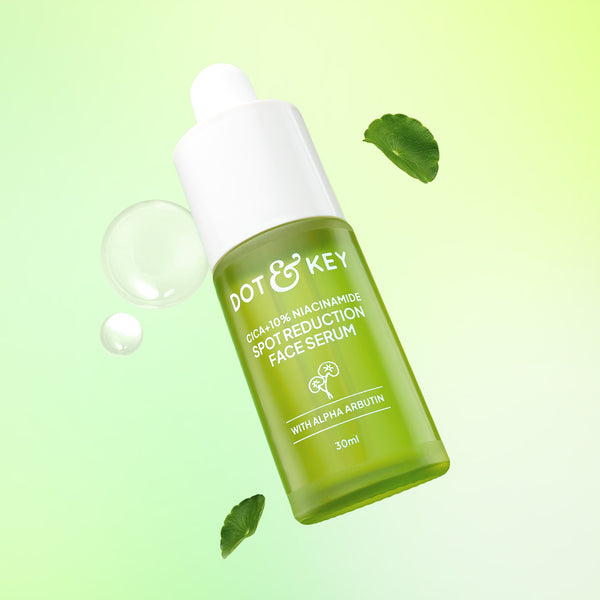
Among these synergies, the pairing of alpha arbutin with niacinamide stands out for its exceptional balance of efficacy and tolerability. Recognizing this, many advanced formulations now combine both ingredients into a single product. An Alpha Arbutin + Niacinamide serum works as a targeted brightening powerhouse. While the alpha arbutin blocks the overproduction of melanin at its source, niacinamide simultaneously prevents any existing pigment from surfacing in visible skin cells.
This dual-action approach tackles hyperpigmentation from two critical angles, often resulting in faster, more noticeable fading of dark spots than using either ingredient alone. What makes this combination particularly intelligent is that niacinamide reinforces the skin’s natural moisture barrier and calms inflammation, creating an ideal environment for the alpha arbutin to work without provoking sensitivity. If you are looking to simplify your routine without sacrificing performance, seeking out a well-formulated product that delivers this pairing can be a strategic move toward clearer, more even-toned skin.
Comparison: Alpha Arbutin vs. Other Brightening Ingredients
Choosing the right active for your skin can be confusing. Here is a straightforward comparison to help you decide.
|
Feature |
Alpha Arbutin |
Vitamin C (L-Ascorbic Acid) |
Kojic Acid |
|
Primary Mechanism |
Competitively and irreversibly inhibits tyrosinase. |
Acts as an antioxidant and reduces melanin formation through multiple pathways. |
Inhibits tyrosinase by chelating copper atoms. |
|
Speed of Results |
8-12 weeks for significant fading. |
Fast; visible changes often in 4-8 weeks. |
Moderate; 6-12 weeks for stubborn spots. |
|
Irritation Potential |
Very Low. Safe for sensitive skin. |
Low to Moderate. Can sting, especially on broken skin. |
Moderate. Can be sensitizing for some skin types. |
|
Key Strength |
Best for hyper-targeted pigment reduction with minimal irritation. |
Best for immediate glow, antioxidant protection, and overall brightening. |
Strongest for very stubborn, isolated dark spots. |
If you have sensitive skin or want a stable, reliable ingredient for daily spot fading, alpha arbutin is a superior choice. If you are looking for a fast-acting glow and anti-aging antioxidant protection, vitamin C is your hero. They can also be used together in the same routine for a comprehensive approach.
Conclusion: The Verdict on Alpha Arbutin
So, does alpha arbutin lighten skin? The scientific verdict is clear: yes, it does, but it does so on its own terms. It’s not a blunt instrument for all-over skin bleaching but a precise, evidence-backed solution for fading unwanted dark marks and restoring a balanced, even-toned complexion.
Its true brilliance lies in its power-gentleness paradox. It offers a pathway to significant brightening and spot reduction comparable to far harsher treatments, yet carries a safety profile that makes it suitable for nearly all skin types. The catch is simple: it requires consistency and unwavering sun protection. If you integrate a well-formulated alpha arbutin product, perhaps one that strategically combines it with niacinamide, into a smart skincare routine and treat it as a marathon, not a sprint, you can expect a visible, authentic transformation where your skin looks clearer, calmer, and more luminous, not simply bleached.
Key Takeaways at a Glance
-
The Short Answer: Yes, alpha arbutin effectively and safely lightens hyperpigmentation and evens skin tone.
-
How It Works: It's a slow-release hydroquinone that inhibits the tyrosinase enzyme to block excess melanin production without killing melanocytes.
-
Evidence is Strong: Studies show it can reduce melanin content significantly and is an effective alternative to hydroquinone for conditions like melasma.
-
Safety First: It is one of the gentlest brightening actives available. The risk of irritation is very low, but wearing daily SPF 30+ is an absolute must.
-
Timeline: Visible results typically appear after 4-8 weeks of consistent, twice-daily use.
-
Maximize Results: Combine it with niacinamide or vitamin C for a synergistic brightening effect. A dual-action Alpha Arbutin + Niacinamide serum offers a simplified way to achieve this. Choose alpha arbutin over beta arbutin for superior potency.
FAQs
1. Does alpha arbutin lighten skin permanently?
No. Alpha arbutin works by inhibiting melanin production. When you stop using the product, the enzyme’s activity can return to normal, and new pigmentation can form if triggered by UV rays or inflammation. Consistent use is required to maintain results.
2. Can I use alpha arbutin with retinol?
Yes. Alpha arbutin and retinol can be a powerful anti-aging and brightening combination. Retinol accelerates skin cell turnover, and alpha arbutin prevents the formation of new pigment. To minimize potential irritation, use them on alternating nights or apply alpha arbutin in the morning and retinol in the evening.
3. What is the best concentration of alpha arbutin?
2% is the most common and clinically proven concentration for over-the-counter products. It provides a near-ideal balance of high efficacy and low irritation risk. Beginners should start with this or a lower concentration to build tolerance.
4. Is alpha arbutin better than vitamin C for hyperpigmentation?
“Better” depends on your skin’s needs. Vitamin C often works faster and is a superior antioxidant. Alpha arbutin is gentler and more stable, making it ideal for sensitive skin. For the most stubborn pigmentation, they are best used together, as they work via complementary mechanisms.
5. Can alpha arbutin be used on all skin tones?
Yes. It is considered a safe and effective option for all skin tones and ethnicities because it targets melanin production upstream rather than destroying melanocytes, which greatly reduces the risk of permanent white spots (hypopigmentation).