Does Glycolic Acid Remove Dark Spots?

Deep | Last Updated On 10 Jan 2026
6 mins read
Table of Contents
Does Glycolic Acid Remove Dark Spots?

Dark spots on the skin can feel frustrating. They pop up from sun exposure, acne scars, or hormonal changes, leaving uneven tone that affects how confident you feel. Many people ask: does glycolic acid remove dark spots? As a dermatologist specialising in cosmetic treatments and evidence-based skincare, I often recommend glycolic acid for hyperpigmentation because it works well for many patients.

Glycolic acid is a powerful alpha hydroxy acid that exfoliates gently and helps fade discolouration. It will not erase every spot overnight, but consistent use can brighten skin significantly. In this article, we explore how glycolic acid for dark spots functions, what recent research shows, and practical ways to use it safely. We cover everything from skin physiology to real results, using simple terms anyone can follow.

Table of Contents

Understanding Dark Spots and Hyperpigmentation

Dark spots, known as hyperpigmentation, appear when skin produces extra melanin. Melanin gives skin its colour, but too much in one area creates patches darker than surrounding skin.

Common causes include:

  • Sun exposure leading to age spots or sun spots

  • Acne leaving post-inflammatory marks

  • Hormonal shifts causing melasma, often on the face

  • Ageing or friction in areas like neck or underarms

Think of melanin like a shield against UV rays. When skin gets triggered, it overproduces this shield in spots. These marks sit in the epidermis or deeper dermis, making them stubborn.

Glycolic acid helps by speeding up removal of pigmented cells. It promotes even tone without harsh bleaching. For mild cases, it offers great improvement, though deeper spots may need extra treatments.

What is Glycolic Acid and Why is it Popular?

Glycolic acid comes from sugar cane and belongs to alpha hydroxy acids (AHAs). Its tiny molecules penetrate skin easily compared to other acids.

In skincare, you find it in cleansers, toners, serums, and professional peels with strengths from 5% to 70%. Lower percentages suit daily use, higher ones target stubborn issues under supervision.

Key benefits of glycolic acid include:

  • Exfoliating dead cells for smoother texture

  • Boosting collagen for firmer skin

  • Improving absorption of other products

  • Fading dark spots by accelerating cell turnover

As Dr. Amy Rabach, a dermatologist, explains: "AHAs help even out skin pigmentation irregularities from melasma and post-inflammatory hyperpigmentation."

Its popularity stems from decades of use in cosmetic dermatology. Guidelines from the American Academy of Dermatology support AHAs for photoaged skin and mild discolouration.

How Glycolic Acid Works to Fade Dark Spots

Glycolic acid acts as a gentle exfoliating acid for skin. It loosens bonds holding dead cells, allowing them to shed naturally.

For hyperpigmentation treatment:

  1. It removes the top layer with excess melanin.

  2. It encourages faster renewal, bringing fresher cells to the surface.

  3. At higher concentrations, it mildly inhibits tyrosinase, reducing new melanin.

Simple analogy: imagine dark spots as ink on paper layers. Glycolic acid peels off top sheets, revealing cleaner ones below.

In skin physiology, it thins the stratum corneum, enhancing brightness. It also improves hydration by drawing in moisture.

Recent insights show glycolic acid benefits for skin brightening extend to body areas like arms or knees with keratosis pilaris or friction marks.

Recent Clinical Evidence on Glycolic Acid Efficacy

Research continues to support glycolic acid for hyperpigmentation. Studies from 2024 and 2025 highlight its role. 

  • A 2025 study compared 50% glycolic acid peels to lactic acid for melasma, finding both effective but glycolic faster for some pigmentation types.

  • Another 2025 trial on 35% glycolic acid versus retinol peels showed significant melasma improvement with either, emphasising exfoliation's power.

  • Sequential peels combining glycolic and trichloroacetic acid reduced melasma severity safely in a July 2025 publication.

  • A systematic review ranked glycolic acid at over 80% efficacy among peels for pigmentation.

These peer-reviewed findings from journals like PubMed confirm glycolic acid dark spots treatment works best consistently, often with sun protection. No study promises total removal, but 60-80% reduction appears common after sessions.

Realistic Benefits and What to Expect

Glycolic acid offers more than spot fading:

  • Brighter overall complexion

  • Reduced fine lines

  • Smoother texture from acne scars

  • Better product penetration

Timeline example: daily 8-10% use might show subtle brightening in two weeks, noticeable fading in 8-12 weeks. Peels accelerate this.

For post-inflammatory hyperpigmentation from acne, it excels by clearing marks as skin heals. Deeper melasma responds slower, often needing combinations. Patience matters. Skin renews gradually, so results build over time.

Safe Ways to Incorporate Glycolic Acid into Your Routine

Start low and slow for best outcomes.

  1. Consult a dermatologist, especially for darker tones prone to irritation.

  2. Patch test on a small area.

  3. Begin with 5-10% products, 2-3 times weekly.

  4. Apply to clean, dry skin at night.

  5. Follow with moisturiser and daily broad-spectrum SPF 30+.

Practical tip: for facial sun spots, use a glycolic toner after cleansing, then hydrating serum.

Increase frequency as skin tolerates. Professional peels every 4-6 weeks suit stubborn cases. Avoid during active sunburn or with strong actives initially.

Common Side Effects and Precautions

Most tolerate glycolic acid well, but side effects occur.

Possible issues:

  • Mild stinging or redness, especially starting

  • Dryness or flaking

  • Heightened sun sensitivity

Rarely, overuse causes worsening pigmentation from inflammation.

Precautions include:

  • Building tolerance gradually

  • Using barrier creams

  • Stopping if severe reaction

  • Avoiding in eczema or very sensitive conditions

Pregnancy? Lower strengths are generally safe, but check with your doctor.

Sun protection prevents rebound darkening.

Boosting Results with Complementary Ingredients

Glycolic acid pairs excellently.

Try with:

  • Vitamin C for antioxidant brightening

  • Niacinamide to calm and even tone

  • Hyaluronic acid for hydration

Avoid initial mixing with retinoids to prevent irritation.

Layering example: glycolic toner, niacinamide serum, moisturiser. This multi-approach tackles hyperpigmentation from angles.

Alternatives to Glycolic Acid for Dark Spots

If glycolic irritates, consider:

  • Lactic acid: gentler AHA for sensitive skin

  • Mandelic acid: larger molecule, slower penetration

  • Kojic acid or azelaic acid for melanin inhibition

  • Tranexamic acid for melasma

Prescription options like hydroquinone work stronger but need monitoring. Lasers or microneedling suit resistant cases. Choose based on skin type and concern.

Conclusion

Glycolic acid can effectively help remove dark spots through exfoliation and cell renewal, supported by ongoing research and clinical practice. It provides a reliable option for achieving brighter, even-toned skin when used correctly. While not an instant solution, its benefits for hyperpigmentation, texture, and radiance make it a staple in evidence-based routines. Always prioritise safety, consistency, and sun protection for optimal results. If dark spots persist or concern you, a dermatologist consultation ensures tailored advice.

Key Takeaways

  • Glycolic acid fades dark spots by exfoliating pigmented cells and promoting renewal.

  • Recent 2025 studies confirm efficacy of peels for melasma and hyperpigmentation.

  • Start with low concentrations and always use sunscreen to protect results.

  • Expect gradual improvement over 8-12 weeks with consistent use.

  • Side effects like redness are common but manageable with proper precautions.

  • Combine with ingredients like vitamin C for enhanced skin brightening.

  • Alternatives exist for those who find glycolic acid too strong.

FAQs

Does glycolic acid really remove dark spots permanently?

It can fade them significantly and prevent new ones with ongoing care, but permanent removal depends on avoiding triggers like sun exposure. Maintenance keeps results.

How often should I use glycolic acid for dark spots?

Begin 2-3 times per week, increasing to daily if tolerated. Overuse risks irritation, slowing progress.

Can glycolic acid worsen dark spots?

Temporarily yes, if it causes inflammation, especially in darker skin tones. Proper use and sun protection minimise this.

Is glycolic acid suitable for sensitive skin?

Lower concentrations or gentler AHAs like lactic may suit better initially. Patch testing is essential.

What concentration of glycolic acid is best for dark spots?

8-15% for home use offers balance of efficacy and safety. Higher peels require professionals.

Can I use glycolic acid during the day?

Better at night due to sun sensitivity. If daytime, follow immediately with sunscreen.

How long until I see results from glycolic acid on dark spots?

Subtle changes in 2-4 weeks, more noticeable fading in 2-3 months with regular application.

Does glycolic acid work on all types of dark spots?

Best for surface-level sun spots and acne marks. Deeper melasma may need combined therapies.


Our Recommendation

Watermelon Cooling Icy Gel Moisturizer With Hyaluronic

Oily & Combination Skin

Watermelon Cooling Icy Gel Moisturizer With Hyaluronic
Full Star Full Star Full Star Full Star Half Star
(1318)

Upto 20% OFF + Free Gifts

495

Watermelon + Glycolic Acid Pore Tightening Toner

Oily, Combination & Normal Skin

Watermelon + Glycolic Acid Pore Tightening Toner
Full Star Full Star Full Star Full Star Half Star
(357)

Upto 20% OFF + Free Gifts

395

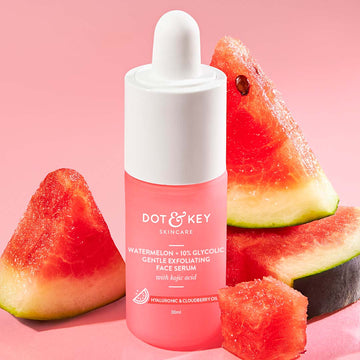
Watermelon & 10% Glycolic Serum

Normal, Oily & Combination Skin

Watermelon & 10% Glycolic Serum
Full Star Full Star Full Star Full Star Half Star
(261)

Upto 20% OFF + Free Gifts

599