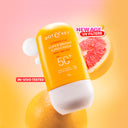
Vitamin C + E Sunscreen SPF 50+ PA++++ With New-Age UV Filters (80g)
₹506
1
Available Offers
Flat 15% OFF
On All Orders
Use code: FLAT15
Shop for Rs.799
and get Free Gift
No code required
Shop for Rs.1049
and get 2 Free Gifts
No code required
FLAT 25% OFF
On All Combos
Use code: COMBO25
Additional 5% OFF
on Prepaid Orders
No code required
Clinical Results:
This sunscreen is tested in an independent third-party laboratory to confirm the level of
protection it provides. Below is the lab report and data points.
Test type:
IN-VIVO SPF Testing as per International Standards –
IS 17494 : 2025 (ISO 24444 : 2019, MOD)
In-Vitro analysis as per COLIPA Guidelines
(Data based on tests conducted by Tamil Nadu Test House Pvt. Ltd., an independent third-party testing laboratory)
Note: The product has been evaluated for efficacy through standardized in-vivo and in-vitro testing under international guidelines
Please be aware that our ingredient list is currently undergoing a transition. As a result, the ingredients listed on this page may vary from those on the product you receive. Rest assured, the product's safety, quality, and performance remain unchanged.
Reduces dullness & tan
Water-light fluid texture
Blocks UVA, UVB & Blue Light rays
Fades dark spots
Delivers lightweight hydration
Use 15 minutes before stepping out.
Apply generously on the face, neck & other body parts.
Re-apply every 2-3 hours for maximum protection.
PRO TIP: Use it even when indoors, or out on a cloudy day. Great under makeup too.
Is Dot & Key Vitamin C + E Sunscreen in vivo tested?
Yes, Dot & Key Vitamin C + E Sunscreen is clinically in vivo tested to verify its SPF 50+ PA++++ protection on real human skin under controlled laboratory conditions.
What is Vitamin C sunscreen and how does it work?
Vitamin C sunscreen is a protective formula infused with Vitamin C (often as stable derivatives like ascorbyl glucoside) alongside SPF filters. It works by blocking UV rays while neutralizing free radicals from sun exposure and pollution, boosting collagen, and brightening skin.
What are the benefits of using Vitamin C sunscreen?
Key Vitamin C sunscreen benefits include broad-spectrum UV protection, antioxidant defence against free radicals, skin brightening, collagen stimulation for firmness, and fading hyperpigmentation. It enhances SPF efficacy, prevents photoageing, and provides hydration—perfect for glowing, youthful skin.
Is Vitamin C sunscreen safe for all skin types?
Yes, Vitamin C sunscreen is generally safe for oily, dry, combination, and sensitive skin types, thanks to stable formulations that minimize irritation. It's especially great for dull or ageing skin. Enjoy Vitamin C sunscreen benefits without compromising your skin's barrier.
When should I use Vitamin C sunscreen—morning or throughout the day?
Apply Vitamin C sunscreen every morning as the final step in your routine for optimal UV and free radical protection. Reapply every 2 hours outdoors or after swimming. Experts recommend it for daily defence against heat and pollution, amplifying Vitamin C sunscreen benefits for brighter, protected skin all day.
How do I apply Vitamin C sunscreen correctly?
Apply a generous amount (about a teaspoon) of Vitamin C sunscreen to clean, dry skin after serums and moisturizers. Massage evenly on face, neck, and exposed areas 15 minutes before sun exposure. This ensures maximum absorption and Vitamin C sunscreen benefits like enhanced brightness and UV shielding.
Can I use Vitamin C sunscreen every day?
Yes, daily use of Vitamin C sunscreen is essential for consistent protection and skin health. It builds cumulative Vitamin C sunscreen benefits, such as reduced dark spots and improved texture.
What SPF level is best in Vitamin C sunscreen?
Opt for SPF 30+ or higher in Vitamin C sunscreen for effective broad-spectrum protection. SPF 50 is ideal for high-exposure activities. Combined with Vitamin C, it boosts defence against free radicals, maximizing Vitamin C sunscreen benefits for anti-ageing and skin brightening.
How should I store Vitamin C sunscreen to maintain its effectiveness?
Store Vitamin C sunscreen in a cool, dark place away from direct sunlight and heat to prevent oxidation of the Vitamin C. Keep the cap tight. Proper storage preserves Vitamin C sunscreen benefits, ensuring the formula remains potent for brightening and protection.
Does Vitamin C sunscreen expire or lose potency?
Yes, Vitamin C sunscreen can expire (check the date on the packaging) or oxidize, turning yellowish. Discard if it changes colour, texture, or smell. Fresh products deliver full Vitamin C sunscreen benefits, like free radical neutralization and UV defence.
Can I use Vitamin C sunscreen with other skincare ingredients like retinol?
Vitamin C sunscreen pairs well with most ingredients, but use retinol at night to avoid potential irritation. It complements hydrators like hyaluronic acid. For seamless integration, try Dot & Key's Vitamin C sunscreen options, enhancing overall Vitamin C sunscreen benefits without conflicts.
How long does it take to see results from Vitamin C sunscreen?
Expect brighter skin and reduced dullness in 2-4 weeks with consistent use of Vitamin C sunscreen. Benefits, like faded spots and firmer texture, may take 8-12 weeks. Our advanced formulas show quicker results in combating hyperpigmentation and photoageing.
Is Vitamin C sunscreen good for acne-prone skin?
Yes, our non-comedogenic Vitamin C sunscreen helps acne-prone skin by reducing inflammation and post-acne marks without clogging pores. It offers clearer and brighter skin while shielding from UV-triggered breakouts.
Can Vitamin C sunscreen help reduce dark spots and hyperpigmentation?
Absolutely—Vitamin C in sunscreen inhibits melanin production, fading dark spots and evening tone while providing UV protection. This dual action amplifies Vitamin C sunscreen benefits for a radiant, spot-free complexion.
Does Vitamin C sunscreen provide complete sun protection?
Vitamin C sunscreen offers broad-spectrum UV protection but isn't 100% foolproof—reapply often.
What's the difference between L-ascorbic acid and other forms of Vitamin C in sunscreen?
L-ascorbic acid is potent but less stable, while derivatives like tetrahexyldecyl ascorbate are more stable and gentle in sunscreen. They convert to active Vitamin C on skin, delivering benefits like brightening without rapid degradation.
How do I choose the best Vitamin C sunscreen for my skin?
Select based on SPF 30+, stable Vitamin C forms, and your skin type. Look for added antioxidants. For reliable Vitamin C sunscreen, consider Dot & Key Vitamin C + E Sunscreen.
Can I use Vitamin C sunscreen under makeup?
Yes, Vitamin C sunscreen absorbs quickly, creating a smooth base for makeup. Apply it last in your routine for protection and a subtle glow.
Is Vitamin C sunscreen suitable for sensitive skin?
Our Vitamin C sunscreen is suitable for sensitive skin with gentle, stable derivatives and mineral filters to minimize irritation. It provides soothing benefits, like reduced redness and enhanced barrier protection.
Even on my sensitive skin there was no redness or itching. The formula seems quite gentle.
I
Ipsita Mohanty
Good for everyday use
Simple effective and cheap. It has become a go to in my morning routine.
K
Kavya Shetty
Great for brown skin
Beign a dusky tone person it often diffcult to find a sunscreen that look natural. This one has worked like a magic for my tone. no white cast, no grayness.








 Free Shipping on order Rs.299 & above
 100% Secure Transaction


 4.4 (50k+)


